profile avatar

The Cotillion

Description

Built in 1960, this 28,500-sq.-ft. venue hosts concerts, dances, and other events.

Social links

Events

March 2026
Card image
03/11/2026, 07:30 PM CDT
Filter

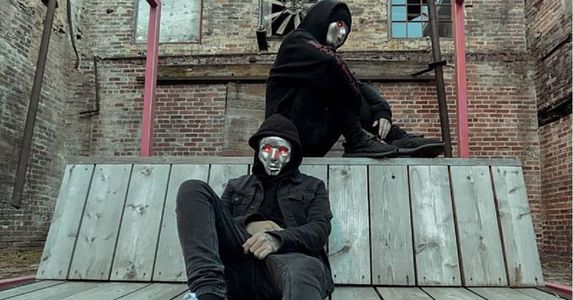
Richard Patrick has had enough. The mastermind behind Filter's fourth album, Anthems for the Damned, its first in five years since The Amalgamut, is what Patrick calls his "howl in the night," a harsh indictment of civilization that doesn't exclude himself from its vision of a world falling apart. Featuring such collaborators as guitarist/songwriter John 5 (Marilyn Manson, Rob Zombie), guitarist Wes Borland (Limp Bizkit) and drummer Josh Freese (A Perfect Circle, Nine Inch Nails, Guns N' Roses, the Vandals), Anthems for the Damned was produced by Pulse Recording's Josh Abraham (Slayer, 30 Seconds to Mars, Velvet Revolver, Staind, Courtney Love). That combination of classic-rock melodies and industrial heavy metal has been part of Patrick's music from the very start, when the Ohio native first shared his musical theories with one-time Nine Inch Nails bandmate Trent Reznor. The decision to revive the Filter brand after five years came after Patrick's experience as singer/lyricist with the supergroup Army of Anyone -- with Stone Temple Pilots' Dean and Robert DeLeo and David Lee Roth drummer Ray Luzier -- releasing a self-titled album on The Firm Music label last year. A single from the album, "Goodbye," went to Top 3 on the Active Rock charts. Since deciding to part ways with Nine Inch Nails to record Filter's multi-platinum debut, Short Bus, for Reprise Records, Patrick has seen his own career take off. That first album produced the Top 10 alternative mainstay, "Hey Man, Nice Shot," as well as such standards as "Dose," "Stuck in Here" and "Under." Anthems for the Damned is his cry in the wilderness, a protest against the status quo, a litany of society's ills and, hopefully, a first step on the road to recovery.

April 2026
Card image
04/19/2026, 08:00 PM CDT
Max McNown

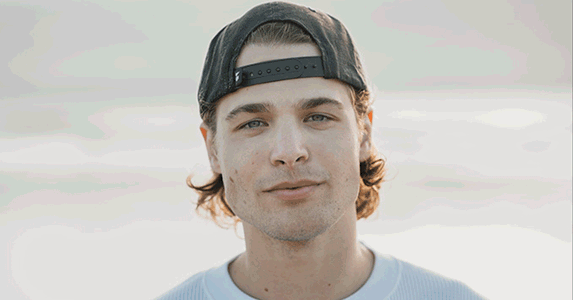
Singer/songwriter Max McNown creates the kind of songs that soundtrack our most intimate moments: times of intense heartache and tremendous loss, immense upheaval and life-changing revelation. Within just a year of teaching himself to play guitar, the Nashville-based artist set off on a meteoric rise largely fueled by his breakout single “A Lot More Free”—a RIAA Gold-certified track whose explosive success includes peaking at #1 on the iTunes singles chart and earning him a #1 spot on Billboard’s Emerging Artists chart. Following the release of his widely lauded debut album Wandering, the Willfully Blind EP, and his acclaimed sophomore album Night Diving, the 23-year-old Oregon native continued his fast ascent to stardom and made his TV performance debut with an appearance on The Kelly Clarkson Show in early 2025, in addition to selling out his first-ever headline tour within just hours. Named a 2025 Artist To Watch by Amazon Music, Holler, and Country Now, McNown now embarks on a thrilling new chapter with Night Diving (The Cost of Growing Up): a 21-song powerhouse that shows the complete depth of his artistry like never before. A drastically expanded edition of his sophomore LP, Night Diving (The Cost of Growing Up) features 11 never-before-heard tracks built on McNown’s quietly potent form of folk/country. “Even though Night Diving was the length of a full album, in my heart it never felt complete to me,” he reveals. “All of these songs were written in the same time period, and my intention was always to have them be one body of work.” Still, McNown points out that the previously unreleased songs surfaced from a recent evolution of his mesmerizing sound, spotlighting an earthy tonality informed by his upbringing in the Pacific Northwest. “Since my first EP I’ve been on the hunt to find myself as a musician, and with this album, I’ve officially made something that fully represents me, both sonically and in my songwriting,” he says. Produced by Jamie Kenney (Colbie Caillat, Laci Kaye Booth) and made with an A-list lineup of session players, Night Diving (The Cost of Growing Up) ultimately provides an extraordinary vessel for his profoundly moving and soul-baring storytelling. Anchored in the charmingly warm vocal presence that McNown partly honed by busking at the beach in Southern California, Night Diving (The Cost of Growing Up) takes the latter half of its title from a gorgeously textured track that perfectly exemplifies his newly refined sound. With its rootsy yet ethereal instrumentation—luminous steel guitar, lush mandolin, soulful organ—“The Cost of Growing Up” arrives as a clear-eyed but melancholy meditation on the inevitability of pain (from the second verse: “Ain’t it interesting/That diamonds come from coal, and steel gets sharper the more time spent in the flame/And there’s consistency/Between heartbreak and ashes/Scraped knees and taxes/One step back for every two you gain”). “To me, the cost of growing up is an acceptance that difficult things are going to happen—from minor inconveniences to devastating loss, it’s all a part of life,” says McNown. “But there’s also beauty in that because, without those hard moments, you wouldn’t be able to truly love.” In the making of Night Diving (The Cost of Growing Up), McNown revisited the title track from the original album: a lived-in meditation on cycles of addiction, set against a spellbinding backdrop of otherworldly textures, moody guitar tones, and strangely haunting rhythms. This time around, he includes a feature from Cameron Whitcomb—a rising singer/songwriter who’s written extensively about his personal history with addiction, and whose force-of-nature vocals add a raw and fiery intensity to the new version of “Night Diving.” “One of the things I respect above all else is authenticity and honesty in music, and Cam is the epitome of that,” says McNown. “When I started thinking about a feature on that song, I knew there was no better person than Cam to join me. He gave it so much energy and his voice is so distinct, and now the song has a whole new life to it.”  Elsewhere on Night Diving (The Cost of Growing Up), McNown lets his inner hopeless romantic shine on songs like the unstoppably joyful “Forever Ain’t Long Enough.” A glorious counterpart to “Better Me For You (Brown Eyes)”—a lilting and dreamlike standout from Night Diving, written when he’d first started dating his girlfriend—“Forever Ain’t Long Enough” rushes forward with a pulse-pounding velocity as McNown lists off all the places he hopes to travel with his beloved (“Let’s chase horizons off the Catalina coastline/Jeep ride all the way to Santa Fe/Sip a coffee to a Montana sunrise/Say goodnight to the Colorado rain”). “It’s about finding somebody who makes it seem like even your entire lifetime isn’t long enough to spend with them,” McNown explains. “It’s saying, ‘Let’s love each other to the best of our abilities and take advantage of every single day, because we know the next day is never promised.’” Meanwhile, on the heavy-hearted but exquisitely catchy “Same Questions,” McNown writes from an outside point of view and explores everything that’s lost when a love story ends. “It’s about going through a breakup and not wanting to deal with the process of going back to square one and getting to know a new person,” he says. “That’s a brutal but relatable experience, and I liked the idea of writing something sad but putting it to a happy folk melody.” In August 2022, McNown headed for Southern California and crashed with his aunt and uncle in San Clemente, where he soon learned to play his dad’s guitar (a gift handed off just as he was leaving home) and showed a friend a song he’d penned in high school. “I didn’t have a lot of faith in myself, but my friend encouraged me to go down to the San Clemente Pier and play that song and see what happened,” he says. “That night I made 93 bucks, and also got a free taco and a girl’s phone number folded into a $5 bill.” As he gained greater confidence in his guitar and vocal skills, McNown started posting covers online and quickly amassed a devoted following while building up a stash of original songs. Released in April 2023, his first official song “Freezing in November” surpassed a million streams in just a few months, paving the way for his signing with Fugitive Recordings. Along with delivering his debut EP A Lot More Free that August, McNown turned out a series of rapturously received singles—racking up 80 million streams in his very first year of releasing music. The following April, he released Wandering and earned critical praise from the likes of People and Holler, with the LP later landing on Whiskey Riff’s list of the year’s best debut albums. Since the arrival of Wandering, Willfully Blind, and Night Diving, McNown has fully claimed his place in the music spotlight. To that end, Kelly Clarkson covered “A Lot More Free” on her show just a month before inviting him on to perform “Better Me For You (Brown Eyes).” Over the past couple of years alone, he’s also shared bills with Wynonna Judd, Wyatt Flores, Michael Marcagi, Sam Barber, Billy Currington, Trampled by Turtles, JOSEPH, and more; toured with Briscoe and Blake Rose; traveled overseas to perform at the C2C: Country to Country festival; and made his debut at the legendary Grand Ole Opry. With his 2025 schedule including his debut headline tour (a massive soldout run with stops across the U.S. and in Europe, the UK, and Australia)—as well as spots on major festivals like Lollapalooza, Boston Calling, and CMA Fest—McNown has undoubtedly cemented his reputation as a captivating live act. “I feel like I’ve found myself as a performer and gained the courage to enjoy the moment,” he says. “One of the biggest highlights was going to C2C and playing for upwards of 15,000 people and hearing them sing along to ‘A Lot More Free.’ It always takes my breath away to look out and see the crowd belting that song at the top of their lungs.” Looking back on Night Diving (The Cost of Growing Up), McNown notes that the newly added batch of songs embody a far more hopeful mood compared with the album’s original tracklist. “Even on ‘The Cost of Growing Up,’ which is one of the saddest songs, there’s an undertone of optimism and a clear silver lining,” he says. And while that optimism was entirely intentional on McNown’s part, he’s highly aware that his music tends to stir up incredibly complex emotions in listeners. “I’ve heard some heavy stories from fans, including someone nearing suicide and feeling as though they were saved by ‘It’s Not Your Fault,’” he says, referring to a particularly poignant track from Night Diving. “It’s amazing how a song can be written about a specific experience, and then you can be told a hundred different stories about the experiences that other people hear in that same song. But I’d never invalidate anyone’s story—the important thing is that people relate to the song and feel heard and less alone. That’s exactly what I’m doing all this for.”    

May 2026
Card image
05/03/2026, 07:00 PM CDT
Lorna Shore

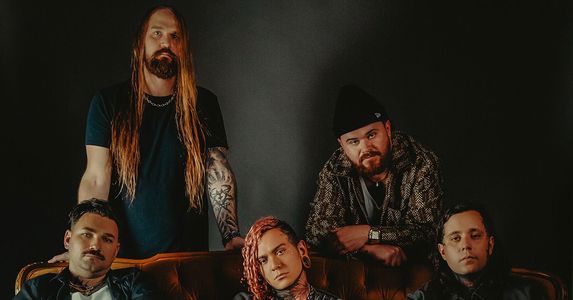
YOUR WORLD ACCORDING TO LORNA SHORE Call them heroes or hell-bringers, it doesn’t matter to the men of Lorna Shore. On their fifth album—the declarative I Feel The Everblack Festering Within Me—the New Jersey quintet are putting all of metal’s subgenres on notice. Because after one listen, you’ll wonder what motivates them and what took metal so long to evolve. You also might wonder whose truck may have hit you while you were listening. Sure, that last sentence may sound more than a touch hyperbolic. But in the context of the myriad of metal subgenres out there, Lorna Shore—vocalist Will Ramos, guitarist Adam De Micco, bassist/vocalist Michael Yager, rhythm guitarist, synth and orchestral arranger Andrew O’Connor and drummer Austin Archey—are operating on a larger plane than ever before. They’ve hit the viral Spotify charts, racked up hundreds of millions of streams, embarked on highly successful tours and in the process, galvanized a significant fanbase that hangs onto the band’s quest for stylistic inversion. But by virtue of physical onslaught and wanting to divine truth from their music, Lorna Shore have kept themselves fired up by torching the metal rulebook at every turn, practically demanding that other genres step up their game. “I think a lot of bands—especially in deathcore—they write stuff that they think is cool, but they're not necessarily writing stuff that's true to them,” offers Ramos. “I think between everything that we've been through over the last couple years, those things have helped push the band to [think] bigger. We’re putting our heart and soul into it. I think it's those little experiences that we've been through that help shape that. It doesn't necessarily work for everybody, but it works for us” Coming off of 2023’s Pain Remains, the members of Lorna Shore realized they needed to continue to bring their A-game in a big way. Not necessarily in a gladiatorial sense where they must vanquish their colleagues. (Metal might be the most passionate of all the music scenes in the world, but that enthusiasm is parallel to the cutthroat competition.) There are all kinds of levels within the 10 tracks on I Feel The Everblack Festering Within Me. Andrew O’Connor’s orchestral arrangements give the songs an epic, cinematic feel that guides listeners into a mise-en-scene of their own creation. When the other members add their parts, the results are positively stentorian. De Micco can thrust into light-speed, black-metal tropes and then downshift into the kind of phrasing one might hear from a ‘70s guitar hero. Ramos is clearly the heir apparent to the kind of vocal madness that Faith No More’s Mike Patton built his considerable reputation on. Add in the propulsive terror of Yager and Archey, and there’s no reason for Lorna Shore’s collective feet to ever touch the ground. Hardly ordinary by anyone’s standards whether it’s deathcore or black metal, there are things at work on Everblack that feel more like an extension of prog rock due to its extremity and big grandiose gestures. But something unusual happened on the way toward the Everblack. Conventional wisdom would dictate that a band with over 10 years of touring is going to grow as individuals, musicians, writers and friends. Thoughts and ideals change and like a lot of bands working at a certain level for so long, maybe slowing and toning things down to summon the spirit of commercial potential would be both interesting and necessary. To the surprise of absolutely nobody, the Shore-men doubled-down on the extremity on their new album. Lorna Shore have been able to access new generations of listeners because their emotional firepower is just as devastating as their existing sonic armories. “I would say aside from me dealing with depression and anxiety and all this other stuff that motivates me to write music, I feel what everyone's saying, but maybe in a different way,” says De Micco. “I know from being a fan of music, getting lost into something separates you from the shit you're dealing with. I think our job as musicians is to be the wedge between people and the shit they're going through. And I hope we can create a little bit of that solace and peace for five minutes the way someone watches a movie for two hours or binges a video game all weekend. I feel like that's my big motivation because I think a lot of people are dealing with a lot of heavy stuff and I think you have to write compelling music to go against the shit that people are dealing with. I feel that motivation to allow what has existed for me to exist for others.” We posit that you may be hard-pressed to find a better side one/song one introduction as detonating as Everblack’s opener, “Prison Of Flesh.” The synth arrangements are ominous, Ramos sounds like he’s in the middle of a complete mental unraveling, and the band shore him up with a wall of sound that feels more influenced by an avant-garde aesthetic (perhaps even hyperpop’s anything-goes mindset) than whatever aural paint random bro-dudes are rocking at the tattoo shop. Then you realize that the song is about the history of dementia in the Ramos family. “The idea that the world is falling apart, and about the fear of losing touch with reality,” says the singer. “The line ‘They’re coming to get me’ is my way of personifying ‘demons’ or something that makes you feel like you’re losing pieces of yourself. The closer they get, the further detached you become until you’re nothing but a husk of fear and delusion.” The album also offers the poignant “Glenwood,” an arduous piece based on the emotions Ramos had during the extended period of time he was estranged from his father. “My only hope is that when people hear ‘Glenwood,’ they can think about their own lives and the people they’ve pushed away and ask themselves, ‘Is it really worth being upset for this long?’ Time is constantly fleeting, just as we are, as well. There are countless references in this song that only the people who knew me growing up would understand. As you can imagine, this song is one I hold very near and dear to me. I wanted to capture that feeling when I wrote this song. It was so incredibly bittersweet and took a lot of courage for me.” While Ramos possesses a set of vocal cords that perform micro-calisthenics nightly, he also has an uncanny ability to refract his darkness towards his fans. On the surface, it sounds terrifying. But Lorna Shore’s audience fervently embraces the singer’s stories and hardships with relish. The feelings of superhuman graphic-novel vicariousness are just as valid and resonant as stories of broken homes and unhealed familial crises. Lorna Shore’s fandom is acutely aware of this: Their early fans have been bringing their kids to their shows and sharing in the thrill of a dynamic metal band, as well as catharsis Lorna Shore delivers. There’s “Oblivion,” a track significantly influenced by the movie Interstellar, that posits that humanity will constantly fail in its quest to do things for the greater good. “Writing this song felt like the culmination of all the things that we’ve done in the past, but brought to the next level,” explains Ramos. “A more evolved version of what Lorna Shore truly is.” He describes “Unbreakable” as “a song that you can hear on your worst day, and somehow feel like that day was a breeze.” After a significant mindset rehaul (“We didn’t want to throw a million notes on the board, we wanted only the ones that felt… right.”), “Unbreakable” became downright anthemic for the band, with Ramos summarizing it as “a very triumphant, all-inclusive song written to bring people together for a beautiful moment where they can realize that no matter what this world throws at us, it will never break us down. We and our bonds are unbreakable.” That sentiment is clearly the hill that the members of Lorna Shore would die upon only to become resurrected with twice the conviction and ambition. The band were all fans of music before they first picked up their gear. Without throwing shade or serving the tea, they will confess that the state of so-called “heavy music” is in desperate need of a whole new consciousness. “Everything that I fell in love with about metal as an outcast of society was that it was so different and rebellious and was such high energy—and we're missing that in this world,” states bassist Yager. “We all listen to music, we all like music.” says De Micco. “So if it doesn't give us the reaction of ‘This sounds sick, I'm stoked about this,’ then it is not a good idea. I feel like that's always been my threshold, from a fan of music and hearing parts that sound cool or give an emotional reaction to something. If you can't even move yourself, then how the hell do you expect to move others?” Yager continues, “I know when we write music, it's very much like we're writing it for ourselves. They're our songs until they're released.” So in conclusion, Lorna Shore are neither dire misery goats, nor flower-picking pollyannas and definitely not lapdogs currying favor from those who would exalt the ordinary. But once listeners embrace I Feel The Everblack Festering Inside Of Me, they will realize that they’re in Lorna Shore’s movie now, and that might tell them something about their lives. When heroes are hard to find, try looking inside yourself first.

Card image
05/04/2026, 06:50 PM CDT
Sevendust

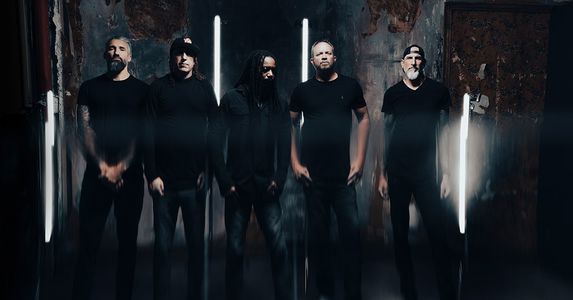
Sevendust never follow a linear path. Instead, they continue to bulldoze a lane of their own with a provenone-two punch of rumbling grooves, unpredictable riffing, and stirringly soulful vocals unlike anything elsein hard rock. As a result, their music connects straight to the heart as evidenced by their full-contact liveshows and diehard “family” of fans. It’s why they’ve been around since 1994, tallied global sales of sevenmillion, logged three gold-selling albums, delivered three Top 15 debuts on the Billboard 200, andgarnered a GRAMMY® Award nomination in the category of “Best Metal Performance.” They’re the rareforce of nature who not only graced the bills of Woodstock and OZZfest, but also Shiprocked! and SonicTemple and some of the largest stages around the globe. Along the way, they’ve notably collaborated witheveryone from members of Deftones, Daughtry, and Staind to Alter Bridge, Periphery, and Xzibit. 2020saw them deliver one of the most-acclaimed albums of their career with Blood & Stone, which MetalHammer christened “Sevendust’s best work in years” and Outburn dubbed “everything a Sevendust fancould want.” However, the Atlanta quintet—Lajon Witherspoon [lead vocals], Clint Lowery [lead guitar, backing vocals],John Connolly [rhythm guitar, backing vocals], Vince Hornsby [bass], and Morgan Rose [drums]—defyexpectations yet again on their fourteenth full-length and debut for Napalm Records, Truth Killer.“We really cared about the process,” notes Clint. “It’s never a straight line with Sevendust. We’ve alwaysmade left turns and dip into super heavy and very melodic sounds. We still try to do things a littledifferently. I think we recreated the magic on this one, and we overcommitted to making sure every songwas great.” In order to do so, the guys regrouped as friends first. Initially, they decamped to Lajon’s farmhouse. Overthe course of four days in 2022, they demoed out the bulk of the record, rekindling the spark that definedtheir seminal output. “We wanted to be friends again, shoot the shit, and become that garage band we were,” Clint goes on.“It set the tone for our relationship, and the creativity opened up. We got back together and made anotherfun record.” Once again, they recorded in Florida with producer Michael “Elvis” Baskette [Alter Bridge, Mammoth,Trivium]. This time around, they expanded the soundscape, incorporating programming by Clint andadding cinematic heft to their signature style. “We took our time on this record,” he goes on. “We pulled in a lot of electronic elements. In the past, Ihired outside programmers, but I did the programming myself. I tried to create a musical bed that madeit easy to sing cool vocal parts. We always set a goal to have a certain sound, and we followed throughwith it. We didn’t compromise.” As such, the album opens with perhaps the biggest departure, the slow-burning “I Might Let The DevilWin.” Piano pierces glitchy beat-craft as Lajon’s delivery borders on magnetic and manic as he confesses,“I want to give in, oh no, the devil won’t win.” If Trent Reznor produced The Weeknd, it might sound something like this…“When we agreed on the song, we realized we could do anything,” says Clint. “The vocal is really upfrontand in your face. It seems like he’s whispering the lyrics in your ear. You keep resisting temptations, butfinally you’re like, ‘It’s just who I am. I’m going to do it’.” On the other end of the spectrum, the first single and finale “Fence” goes right for the jugular withpummeling drums, a chugging riff, and guttural barks from Lajon. It crashes right into a hammering hookbefore spiraling into an incendiary solo. “It has the old school Sevendust vibes,” he smiles. “It was really a product of collaboration at thefarmhouse. Morgan was playing, and we all started jamming in the same room. I’m so glad we got a chanceto do a headhunter like ‘Fence’ for this album.” The title track “Truth Killer” fuses searing orchestration with a rush of distortion and powerhouse refrain.“Nobody wants to hear the real truth,” laments Clint. “They want things sugarcoated and watered-down,so they can feel better. It definitely spoke to the overall tone of the subject matter.”Then, there’s “Everything.” A jarring guitar melody underlines an affirmation on the catastrophicallycatchy chorus. “You’re basically saying, ‘I’ll be anything you need me to be, and I’ll be there for you in everyway possible’,” he elaborates. As if baptized in frustration, “Holy Water” snakes through an off-kilter bounce over incisive synths towardsa massive chant, “Someday I’ll see the light. I hope before I die.”“None of us are perfect, so there’s no reason to judge,” Clint observes. “We’re all trying to figure it out,but a lot of people will sling their holy water at you and act like they’re better than everyone. I have adefinite belief and relationship with God, but I’m not here to make anyone believe anything.”“Superficial Drug” intoxicates with a sinewy bass line and head-nodding groove as one of the record’smost melodic moments takes hold. “Everyone needs the ‘follows’ and ‘likes’,” he continues. “The social media world is very superficial for themost part. It’s part of the design, and I’m guilty of it too. So, the song says, ‘Go ahead and take yoursuperficial drug. I’m over it’. I want to be around people where there’s depth to the conversations. Wehave enough friends. We would die for our fans and the Sevendust family. That’s all we need.”In the end, Truth Killer reaffirms there’s only one Sevendust—and they’re here forever.“As a kid who used to wait in lines to see concerts, I want to deliver the artistic quality I was looking for asa fan,” Clint leaves off. “I want people to know we cared, took some chances, and still have the creativespark. I want them to know we have more to say and more to prove.”

Contacts

11120 W Kellogg Dr, Wichita, KS 67209, USA