profile avatar

Stuart's Opera House

Description

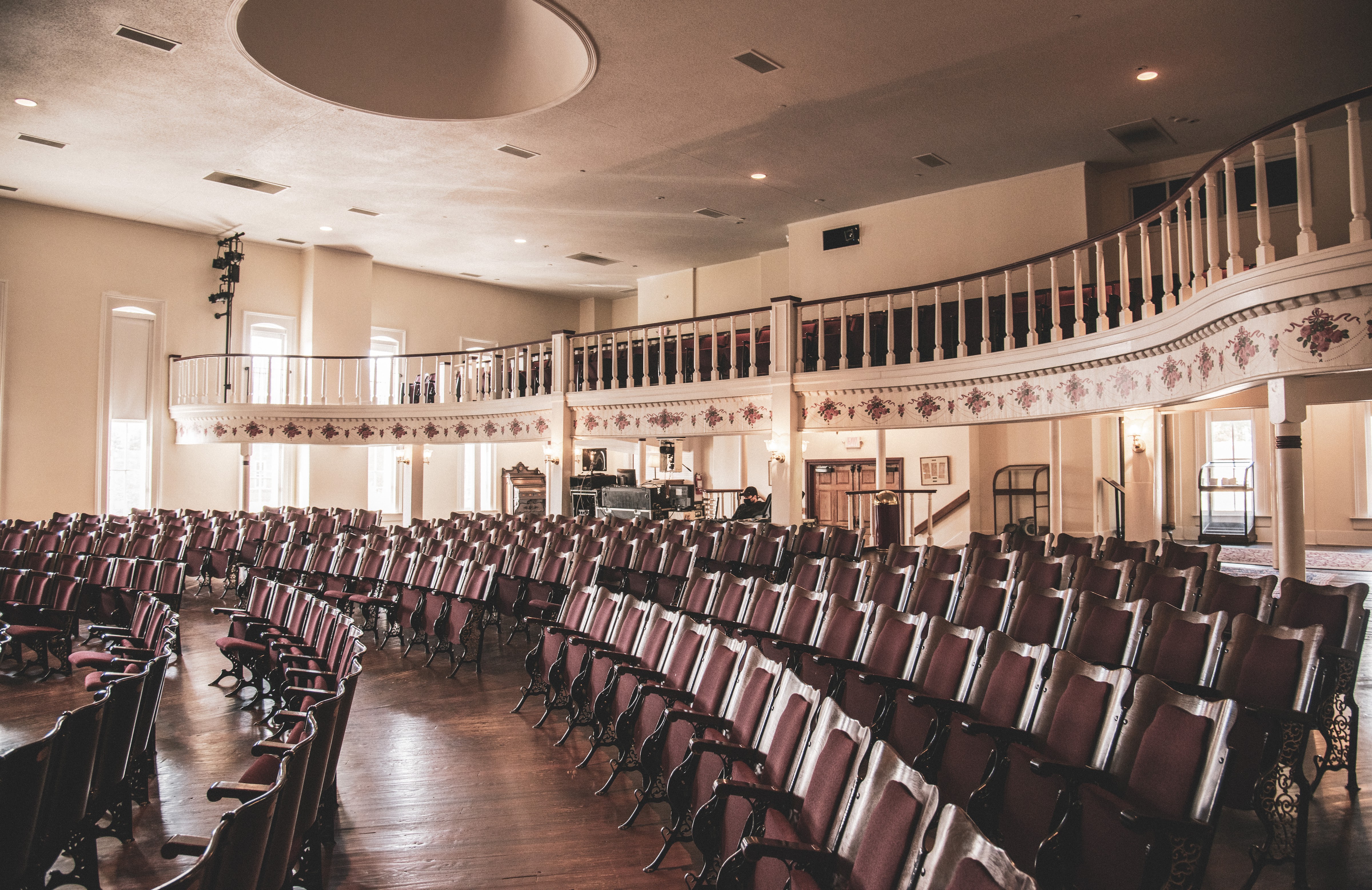
Theater, concert hall and wedding venue staging musical performances and plays, plus opera performances.

Events

February 2026
Card image
02/12/2026, 07:30 PM EST
Valerie June

“Can we move forward? Are we ready?” Valerie June has opened her deepest channel yet to create her fourth studio album, Owls, Omens, and Oracles. The Grammy-nominated singer-songwriter and three-time Americana Music Honors and Awards nominee weaves fresh medicinal downloads of love, sweetness, goodness, and joy together with songs that have flowed through her for years. Halfway through a decade of immense and rapid global change, she asserts a multidimensional Blackness steeped in laughter, truth, magic, delight, and interdependence. The opening track and first single, "Joy, Joy!", gives us an irresistible, playful, and effervescent invitation to surrender to the light always available in our souls. This album is a radical statement to break with the skepticism, surveillance, and doom scrolling – let yourself celebrate your aliveness. Connect, weep, change, open. Rooted in the belief that what we focus on is what we manifest, June dreams a songpath forward that leaves no one behind. She has been softening and clarifying her sound since the 2013 release of Pushin' Against A Stone, through The Order of Time, The Moon and Stars: Prescriptions for Dreamers, and Under Cover. From the Kennedy Center and opening for The Rolling Stones at Hyde Park to supporting Tyler Childers, Trevor Hall, Brandi Carlile, Gary Clark Jr., and John Prine, June offers us a root system spanning Earth's magma core to the cosmos. This newest work shows Valerie's own spiritual growth, her deepening, the opening of ancestral channels into both her glorious voice and her tender lyrics. "Valerie June has built a devoted following by ignoring expectations. She is simultaneously rural and cosmopolitan, historically minded and contemporary, idiosyncratic and fashionable, mystical and down-to-earth." — New York Times June is not alone in crafting this sacred field for the contemplation of love and being human. Her dynamic and distinct voice centers an incredible circle of collaborators, including producer M. Ward and special guests Blind Boys of Alabama, Norah Jones, and DJ Cavem Moetavation. In this vast realm, we can follow June's singular sound, a north star as steady and undeniable as any true love story, telling us to "trust the path." She is inviting us out of the small boxes that keep us apart from each other, her music creating a space where we are already together, already one. The horizon changes as we get closer to it, but our songstress is sure-footed in the face of uncertainty and change. She wants everyone who listens to this music to want to be alive, to love, co-creating a future together. Mavis Staples, Newport Folk Festival, and Hardly Strictly Bluegrass Festival were the auspicious forces that led June and Ward to record fourteen original songs at 64 Sound in Los Angeles. While producing Mavis' 2016 album, Living on a High Note, Ward invited June to contribute a song that became the title track. "I had been a fan of both The Staple Singers and She and Him (Zooey Deschanel and M. Ward) for years, so joining Mavis and Ward in the studio was a dream come true. I loved his production style and the way he captured distinct female voices. I can remember the smell of the room and the feel of the air the first time I heard Mavis and Zooey sing. When you hear voices like that, you can't confuse them with anyone else out there. It was also a surprise to be in the room with stellar musicians like Steven Hodges, who worked with artists I admire who have singularly unique sounds from Tom Waits to David Lynch." Backstage is where the magic happens. Musicians often find themselves traveling to similar festivals. With a spirit of togetherness circling her at every turn, in summer/fall 2023, June joined Ward for spontaneous guest appearances during his sets at Newport Folk Festival and Hardly Strictly Bluegrass, setting the plan in motion to work together in the studio. "One of the things I enjoy about listening to M. Ward's music is that he's an incredibly amazing guitar player. While he can shred and rock, he also 'gets' the blues. After sitting in with him for those live sets, we vowed to work together one day on a record." Welcoming June to his stomping ground in California, Ward chose Pierre de Reeder (Rilo Kiley, Jenny Lewis) to engineer the album. Sonically taking on a signature analog production sound, the style intertwines the old and the new. "Bands and groups from The Strokes to The Ronettes have always stolen my heart. I wanted a low-fi, gritty sound with many of these songs. I wanted to get grungy, but I also wanted to keep the softness of a singer-songwriter with a guitar at an open mic night." An instant foot-stompin' hip-shaker, "Joy, Joy!" opens the album with an exuberance we are all born longing to find in the souls that surround us. The adventure begins with Kaveh Rastegar on bass (John Legend, Beck) and Steven Hodges on drums (Tom Waits, David Lynch). Throwing it all back on the soulful "All I Really Wanna Do," June sings and layers her voice reminiscent of an idiosyncratic version of the Supremes. She's even started to expand her compositions to simplified chords and notes on the piano. "String instruments (guitar, banjo, banjolele) are the only instruments I play, but I suppose if there's an instrument in the room that speaks to me, then I can write a song on anything. I adore Daniel Johnston's songs. His songwriting is so simple, yet powerful." As June's voice growls, hisses, studders, moans, and chants its way through the anthemic rocker "Endless Tree," it's clear that every song on the album is composed with a medicine, message, and purpose of honoring our interconnectedness. "Getting the courage to do something small Lifting the spirits of all that you saw Feeling the tiniest spark in your heart Only an ember can light up the dark Are you ready to see A world where we could all be free As branches of an endless tree?" While June plays many instruments, she clarifies that the voice is an instrument and will have its own way of serving the song. Her voice grips us with visceral twists and a fierceness of raw emotion that threads textures and tones through the needle of a multi-genre American quilt, striking against notions that voices should always sound polished and pretty. Gracefulness and gentleness harmonize with dissonance, edginess, and precarity in the sharpest parts of her voice, evoking a tenderness within even the hardest heart on "Trust the Path." A hand-clappin', toe-tapper, "Love Me Any Ole Way," leads us from Memphis to New Orleans with the horn arrangements by Nate Walcott (Bright Eyes, Conor Oberst, and the Mystic Valley Band). A published author, June, performs spoken word with her sultry southern accent, reading a poem from her book Maps for the Modern World (Andrews McMeel, Simon and Schuster). Earning the admiration of Bob Dylan, June walks in his footsteps from American rock music to folky songs like "Sweet Things Just for You" featuring backing vocals from Norah Jones to "Missin' You," which includes Ward's silky Mississippi John Hurt and John Fahey style fingerpicking guitar. Every single note June sings is dusted with her distinctive Tennessee twang, but that doesn't mean she should ever be limited by genre. June holds the complexity of "My life is a country song," and "I am multidimensional, beyond category." This album is expansive, growing from her psychedelic folk, indie rock, Appalachian, bluegrass, country soul, orchestral pop, and blues root system into an intergalactic web of wisdom. Listening to her work, we are reminded that whoever created this Earth didn't stick to one genre, so why should we?

March 2026
Card image
03/24/2026, 07:30 PM EDT
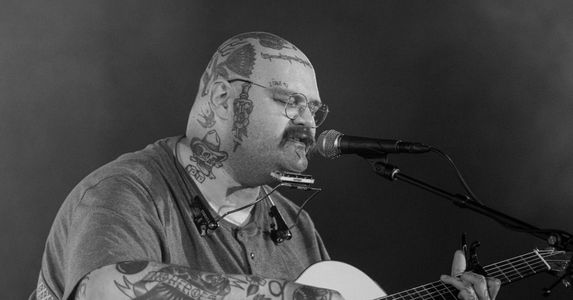
John Moreland

After an impressive 2010s run of albums that earned him a devoted fanbase, accolades from outlets like   The New York Times, Fresh Air, and Pitchfork, and a place in the upper echelon of modern Americana singer-songwriters, John Moreland has already taken two unexpected turns this decade, both of which highlight his fierce artistic independence. First, he released a brilliant and sonically layered folk-electronica meditation on modern alienation, 2022’s Birds In The Ceiling, that took some of his fans by surprise. Then, after wrapping up a difficult tour behind that record in November 2022, he stopped working entirely. He took an entire year off from playing shows and didn’t use a smartphone for 6 months. “At the end of that year, I was just like ‘Nobody call me’. I needed to not do anything for a while and just process,” Moreland says. After nearly a decade in the limelight, constantly jostled by the expectations of his audience, the music industry, and anonymous strangers online, he carved out some time to rest, heal, and reflect for the first time. The result of that unplugged year at home is 2024’s Visitor , a folk-rock record that is intimate, immediate, deeply thoughtful, and catchy as hell. Moreland recorded the album at his home in Bixby, Oklahoma, in only ten days, playing nearly every instrument himself (his wife Pearl Rachinsky sang on one song, and his longtime collaborator John Calvin Abney contributed a guitar solo), as well as engineering and mixing the album. “Simplicity and immediacy felt very important to the process,” he says. This is a return to the approach Moreland took on his breakthrough albums, 2013’s In The Throes and 2015’s High On Tulsa Heat , both of which were largely self-recorded at home with a small cadre of additional musicians. Echoes of these early albums can be heard on Visitor (Moreland makes a passing reference to In The Throes’ opening track “I Need You To Tell Me Who I Am” in two different songs on Visitor ), which finds Moreland shutting out the noisy world outside, and the even noisier digital world in his pocket, to reconnect with a muse that’s had to increasingly compete for his attention in the intervening years. Visitor charts his journey back to this muse. If Birds In The Ceiling’s theme was alienation, Visitor’s theme is un-alienation. Moreland begins the album where he began his year-long process of healing: doomscrolling past images of political turmoil, war, and environmental destruction, in a trio of surprisingly hooky folk songs that address present-day social realities more directly than any previous John Moreland songs. On opening track “The Future Is Coming Fast”, Moreland describes the perpetually logged-on life in a time of rolling catastrophe over gentle fingerpicking: “The news keeps steady coming in / Our condition shows its teeth again / A nightmare we all thought would end.” In the bridge of that song, Moreland lands on a key couplet that captures the personal toll of living inside a perpetual cycle of digital bleakness, while also hinting at a way out: “But we don’t grieve, and we don’t rest / We just choose the lie that feels the best.” In order to cope with our digitally mediated lives, where we constantly bear witness to ongoing disasters while feeling powerless to do anything about them, we must walk around in a persistent state of denial. We repress feelings and lie to ourselves continuously. This status quo is, of course, antithetical to the conditions that produce transcendent works of art. For an artist with ambitions like Moreland’s, this is a big problem.   An infinite feed filled with bad news isn’t the only thing that’s been keeping Moreland from processing his emotions. Ironically, a busy career as a touring musician can prevent you from doing the deep self-reflection so necessary to the creative process just as much as a smartphone can. On “No Time”, Moreland sings “Now it’s all a blur / They told you who you were,” followed by the chorus line, “I don’t have the time to cry”. In the bridge of “Will The Heavens Catch Us?”, Moreland describes how painful it can feel to focus exclusively on chasing success - often by following rules set down by others - without taking the time to process one’s emotions, reflect, and heal: “We writhe in agony / For our precious little legacy”. No wonder Moreland needed a break. So what’s Moreland’s solution to this impasse? The first step is the same one that Henry David Thoreau posed in Walden , another work about an artist intentionally isolating with the purpose of pursuing a deeper truth: “Simplify, simplify, simplify”. No shows for a whole year. No smartphone. No studio time. No additional musicians. Strip things away and let inspiration emerge. On a musical level, the result is a raw, straightforward sound. Moreland leaves a lot of space in these songs. To hammer home the folk immediacy, he includes some new-for-him instrumentation, most prominently on two haunting instrumental interludes that he tracked live with a field recorder during late-night country drives. (Who knew that, on top of everything else, Moreland plays the mandolin and fiddle?) The result is that, when Moreland sings “The more you say, the less it means” on the track of that title, it has the feeling of being a sort of personal mantra. By doing all of that simplifying, Moreland creates space to invite the muse back in - a process that he narrates in a pair of gorgeous invocations that kick off Side Two of the album, “Blue Dream Carolina” and “Silver Sliver” (the latter of which was also tracked live with a field recorder). He begins the side with what is perhaps the record’s most poignant verse: Blue dream Carolina, remind me why I do this Tell me what the truth is, don’t tell me who to be I don’t have to tell you this life is plenty painful Here comes my fallen angel, falling down on me By the end of this verse, his muse, his “fallen angel”, has returned to him, now a little worse for the wear. And by the end of the album, Moreland even seems to have resolved some of the internal struggles that led to his year off the road, as is revealed in a fiery couplet that signals his recommitment to a relentless pursuit of the truth: “I will not be your puppet or your payment / Your easy entertainment, for I’ve made amends to me.” Moreland has grieved and rested and come out on the other side with a new world-weariness and hard-won wisdom. But there is another path he could have taken. On his Petty-esque ode to despair “One Man Holds The World Hostage”, Moreland cleverly leaves the identity of the “one man” in question open. He could be one of any number of the men currently endangering humanity, whether it’s a world leader with access to nuclear weapons, an oil CEO pursuing ever-greater profits in spite of the threat posed by climate change, or just an average Joe with hate in his heart. But all of these “one men” have something in common. As Moreland sings, “One man holds the world hostage ‘cause he’s afraid of his feelings”. This is the line that unifies the album’s social commentary with the personal journey that Moreland describes. The denial and avoidance that most of us rely on to cope with the relentless speed and noise of modern life are, if allowed to fester, also the source of our greatest dangers. If we don’t work through our shit, Moreland suggests, we all have the potential to turn to the dark side. Moreland’s narration of his journey back to his muse is more than a simple anecdote, then. The steps that he took - simplify your life, then listen to that deep and quiet voice inside of you long and hard - form a road map for all of us toward some sort of healing, not just for ourselves individually, but potentially for society as a whole. John Moreland is known for writing lines that hit you in the gut, but many of the best moments on Visitor  are more subtle. The significance of one of the record’s best lines, from “The More You Say, The Less It Means,” may take multiple listens to fully sink in: “Some folks say and some folks know”. This line sums up John Moreland’s worldview very neatly. It lays out the dichotomy of truth and lies that Moreland has spent his entire career examining, but now more elegantly than ever. On the one hand, there are people who constantly talk (or sing, or write, or post online) without deep thought or reflection - often irresponsibly, even dangerously, and for personal gain. These are the “weary worn-out fools” and “famous false prophets” he lambasted on In The Throes, or the subject of “One Man Holds The World Hostage” on Visitor . And on the other hand, there are folks who know - those who commit themselves to the pursuit of truth and wisdom, and who only say things when they fully know them to be true. In Moreland’s book, the artist’s true calling is to be one of the latter - the “folks who know”. While John Moreland has already earned a spot in the pantheon of the great singer-songwriters of his generation, Visitor confirms his place in that much loftier Hall Of Fame

Contacts

52 Public Square, Nelsonville, OH 45764, USA