profile avatar

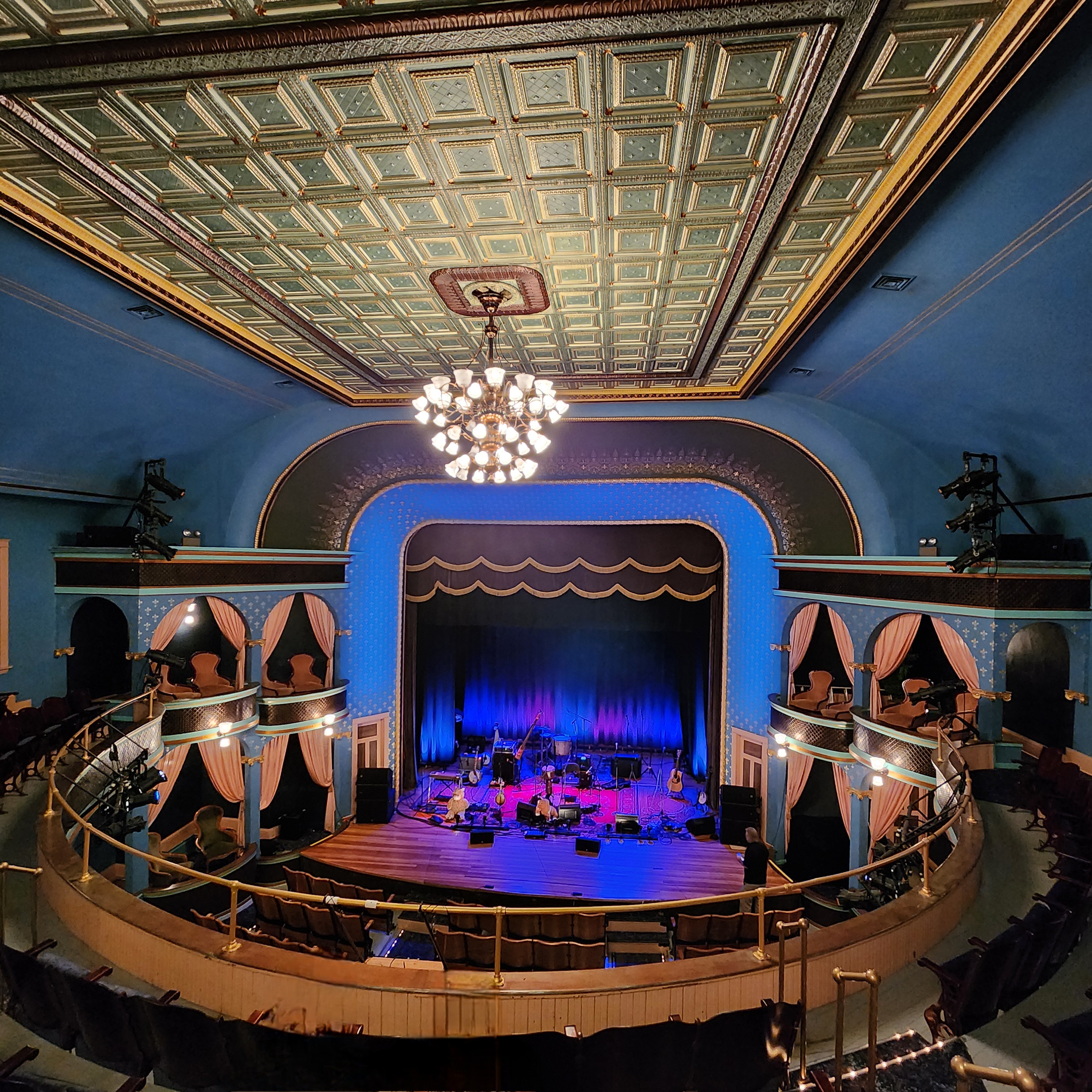
Stoughton Opera House

Description

Venue for concerts and opera featuring wood-accented seats and acoustics.

Events

February 2026
Card image
02/28/2026, 07:30 PM CST
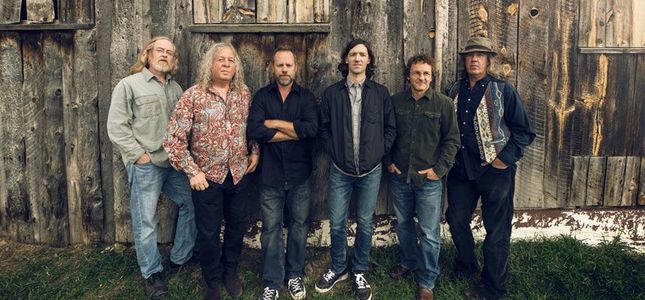
Hot Club of Cowtown

The story begins with a classic musical travel adventure: an ad in the music section of New York City's Village Voice. In the mid-'90s Elana James was looking to join a "gigging band" when Whit Smith answered her ad. Though he had no shows on the books, Whit somehow convinced Elana to come down to his East Village apartment and rock out for an evening just to see what would happen. When she arrived, he opened the door in big furry slippers and the rest is history.More than a decade later, the Hot Club of Cowtown has grown to be the most globe-trotting, hard-swinging Western Swing trio on the planet. From early days busking for tips in San Diego's Balboa Park, the band has grown and developed into a formidable international sensation. The Hot Club's ever-growing presence on the international festival scene has grown with its relentless touring over the years alongside the release of five critically acclaimed CDs on American Roots label HighTone Records. In August 2008 the Hot Club's sixth CD, "The Best of the Hot Club of Cowtown," a hand-picked, band-picked, twenty-song retrospective, was released by Shout!Factory.After a two-year hiatus during 2005-2007 the band went its separate ways, reuniting in 2008 with a packed tour schedule and a new studio CD of original material slated for release in early 2009.In the meantime, some things haven't changed. The band--Elana James on violin and vocals, Whit Smith on guitar and vocals, and Jake Erwin on bass and vocals--still swings harder than ever as it continues to develop it's unique, ever-evolving sound. This journey, which began with the roots of the Hot Jazz era, Americana music, vintage pop and folk music, continues to unfold into the new sound of the group's original songs.In the United States, the Hot Club of Cowtown has been featured on All Things Considered, The Grand Ol' Opry, $40 Dollars a Day with Rachel Ray, Mountain Stage, A Prairie Home Companion, and numerous other radio and television programs. In the UK they have appeared extensively on BBC Radio with Bob Harris and Andy Kershaw, and on BBC TV's "Later" with Jools Holland, the "Live From Glastonbury Festival" broadcast, as well as throughout the UK at festivals, theatres, and clubs. Among the youngest members ever to be inducted into the Texas Western Swing Hall of Fame, in 2006 they also toured as musical ambassadors for the US State Department and were honored to be the first American band ever to tour in Azerbaijan. These days, tours with Bob Dylan, Willie Nelson, the Mavericks and others keep the Hot Club of Cowtown busy dazzling new audiences both nationally and internationally throughout much of the year.

March 2026
Card image
03/07/2026, 07:30 PM CST
Ruthie Foster

Everybody ought to have a stone love; So says Ruthie Foster on the opening cut of The Truth According to Ruthie Foster. And when Ruthie lays it down, you'd be well advised to listen. This extraordinary songwriter/performer tackles life's big issues throughout her sizzling new album. On it, Ruthie repeatedly testifies to her core message - that through all of the ups and downs of living, you must stay true to yourself. The pain as well as the joy of love, the strength it takes to weather life's challenges, the hope that grows from seeds of faith and wisdom: All of this breathes inspiration and celebration into The Truth According to Ruthie Foster. And the music brings it to life. Truth be told, Foster could sing the phone book, jam on a laundry list and send everyone home happy. But the combination on The Truth According to Ruthie Foster of uplifting lyric and electrifying vocals, backed by a band of world-class players bristling with soul, proves impossible to resist. Even fans who have followed her trajectory from her self-released debut through the aptly-titled The Phenomenal Ruthie Foster in 2007 will find something different in The Truth According to Ruthie Foster - namely, the summing-up of the various influences in this artist's growth. The music of The Truth According to Ruthie Foster is in fact the soundtrack of a young but remarkable life. From her beginnings in the Brazos Valley of Central Texas, she was launched by a strong mother and a large supportive family down a path whose pitfalls Ruthie learned to avoid and whose destination she charted on her own, with talent, faith and determination lighting her way. On her previous albums and gigs that have taken her from choir lofts to folk bistros and onto stages in Europe and Australia, Foster has raised the multiple flags of American music. There's Southern blues in her groove, rock in her rhythm, a blend of gospel redemption, country poetry and jazz elegance in her singing. But not until The Truth According to Ruthie Foster have all the pieces fit into a picture this powerful. For all the facets of this album, the heat of soul music burns at its core. That's what drew her to Memphis, where she set up shop in the legendary Ardent Studios with a stunning assemblage of musicians. Symbolically, Ruthie began working on the very day of Hayes' funeral - the same studio with many of the same musicians that Isaac Hayes often used. Once there they began working to convey the energy of Ruthie's performances, cutting almost everything live, going for feeling above all else…and making their own kind of history. With a sound that ignores demographic lines and a charisma that can ignite any audience, Foster emerges on The Truth According to Ruthie Foster as an artist of all-encompassing appeal. This was only a matter of time. Even as a young girl, she was taking in a wide variety of music, whether through the hymns her mother taught her, the Beatles songs she analyzed in a book given by her guitar teacher, the 45s her truck-driving uncle would drop off during his visits, the old-school country she heard while watching various country variety shows with her grandfather, or the pop songs that crackled through the family radio. It didn't matter to me what genre it was she remembers. I just took it all in as great music - music that moved me. Even before her debut at age 14 as a soloist in the choir her uncle conducted, Foster knew that her life would revolve around music. After moving to Waco to attend McClennan Community College, she mixed classes in music and audio engineering with visits to clubs at night, where the curriculum wasn't based not on textbooks but on the power of performance. After a while she was fronting a blues band in biker bars and other venues from Dallas to San Antonio. Foster immersed herself so deeply in music that eventually she decided she needed to step back and regain a little real-world perspective. For years, all I did was eat, talk, dream and live about music. It got to the point that I wanted to find out if I could even hold a conversation about anything else, she recalls, laughing. But I was also curious about what was going on with the rest of the world. So I joined the Navy. Even there, music tracked her down. At a Christmas party for her helicopter squadron, she couldn't resist sitting in with the band to sing a few choruses of Red House. It was a short step from there to being signed up by Pride, a Navy ensemble that played the Top 40 and funk hits of the day at recruitment drives, mainly throughout the Southeastern states. There were seven of us, and I was the only woman in the band, she recalls. That's where I learned how to work and hold my own on the road, and that was huge for me too. From there, Foster's path led to New York, where she absorbed more influences by performing at folk venues and collaborating with some of the city's better songwriters. Supported at the time by a contract with Atlantic Records, she expanded her lyrical and musical range. But it became apparent that she wasn't the mainstream power-ballad singer the label wanted her to be, and that her writing was veering away from commercial pop and drawing instead from the roots that had nourished her personally and artistically in her youth. Then, her duty as a daughter called her to look after her mother during her final illness, and Foster took that as her cue to pack up and head back home to Texas. Since that time, Foster has progressed through five albums and a steady regimen of hard work, whether fronting a full band or working solo, writing at her digs in Austin or taking it to the people. Her shows have inspired a string of reviews in which the essential points are made repeatedly: Ruthie Foster merits comparison to the legends that inspired her, even as her unique contributions stake out a place of her own in the spotlight. Ruthie's drawn comparisons to Ella and Aretha, but musically neither is really close, observed the Philadelphia City Paper in one such rave. So it is throughout The Truth According to Ruthie Foster, Ruthie Foster's greatest triumph to date. And that is as true as truth can get.

Card image
03/12/2026, 07:30 PM CDT
Railroad Earth

There’s a great scene in The Last Waltz – the documentary about The Band’s final concert – where director Martin Scorsese is discussing music with drummer/singer/mandolin player Levon Helm. Helm says, “If it mixes with rhythm, and if it dances, then you’ve got a great combination of all those different kinds of music: country, bluegrass, blues music, show music…” To which Scorsese, the inquisitive interviewer, asks, “What’s it called, then?" “Rock & roll!” Clearly looking for a more specific answer, but realizing that he isn’t going to get one, Marty laughs. “Rock & roll…” Well, that’s the way it is sometimes: musicians play music, and don’t necessarily worry about where it gets filed. It’s the writers, record labels, managers, etc., who tend to fret about what “kind” of music it is. And like The Band, the members of Railroad Earth aren’t losing sleep about what “kind” of music they play – they just play it. When they started out in 2001, they were a bunch of guys interested in playing acoustic instruments together. As Railroad Earth violin/vocalist Tim Carbone recalls, “All of us had been playing in various projects for years, and many of us had played together in different projects. But this time, we found ourselves all available at the same time.” Songwriter/lead vocalist Todd Sheaffer continues, “When we started, we only loosely had the idea of getting together and playing some music. It started that informally; just getting together and doing some picking and playing. Over a couple of month period, we started working on some original songs, as well as playing some covers that we thought would be fun to play.” Shortly thereafter, they took five songs from their budding repertoire into a studio and knocked out a demo in just two days. Their soon-to-be manager sent that demo to a few festivals, and – to the band’s surprise – they were booked at the prestigious Telluride Bluegrass Festival before they’d even played their first gig. This prompted them to quickly go in and record five more songs; the ten combined tracks of which made up their debut album, “The Black Bear Sessions.” That was the beginning of Railroad Earth’s journey: since those early days, they’ve gone on to release five more critically acclaimed studio albums and one hugely popular live one called, “Elko.” They’ve also amassed a huge and loyal fanbase who turn up to support them in every corner of the country, and often take advantage of the band’s liberal taping and photo policy. But Railroad Earth bristle at the notion of being lumped into any one “scene.” Not out of animosity for any other artists: it’s just that they don’t find the labels very useful. As Carbone points out, “We use unique acoustic instrumentation, but we’re definitely not a bluegrass or country band, which sometimes leaves music writers confused as to how to categorize us. We’re essentially playing rock on acoustic instruments.” Ultimately, Railroad Earth’s music is driven by the remarkable songs of front-man, Todd Sheaffer, and is delivered with seamless arrangements and superb musicianship courtesy of all six band members. As mandolin/bouzouki player John Skehan points out, “Our M.O. has always been that we can improvise all day long, but we only do it in service to the song. There are a lot of songs that, when we play them live, we adhere to the arrangement from the record. And other songs, in the nature and the spirit of the song, everyone knows we can kind of take flight on them.” Sheaffer continues: “The songs are our focus, our focal point; it all starts right there. Anything else just comments on the songs and gives them color. Some songs are more open than others. They ‘want’ to be approached that way – where we can explore and trade musical ideas and open them up to different territories. But sometimes it is what the song is about.” So: they can jam with the best of them and they have some bluegrass influences, but they use drums and amplifiers (somewhat taboo in the bluegrass world). What kind of music is it then? Mandolin/vocalist John Skehan offers this semi-descriptive term: “I always describe it as a string band, but an amplified string band with drums.” Tim Carbone takes a swing: “We’re a Country & Eastern band! ” Todd Sheaffer offers “A souped-up string band? I don’t know. I’m not good at this.” Or, as a great drummer/singer/mandolin player with an appreciation for Americana once said: “Rock & roll!”

Card image
03/13/2026, 07:30 PM CDT
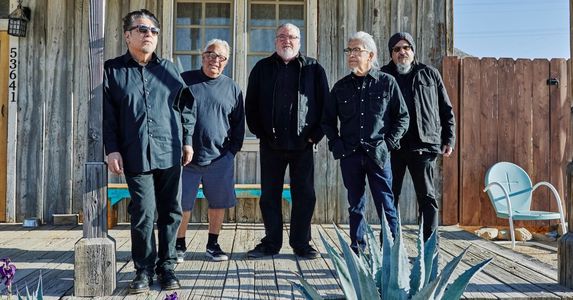
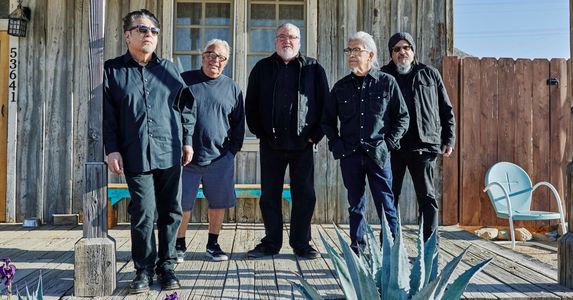
Los Lobos

It’s a matter of time. 50 years to be exact. And in that time Los Lobos have created an unprecedented body of work, a legacy of greatness. The numbers are staggering: 100+ gigs a year for five decades running, crossing millions of miles to rock millions of fans. And that’s just at the live shows. In between they’ve recorded 17 studio albums, 7 live LPs, 3 compilations, 2 EPs, 2 DVDs, and contributed 40+ guest appearances on their friends’ recordings—all garnering 4 Grammys, an Austin City Limits Hall of Fame induction, the ALMA Ritchie Valens Pioneer Award, NEA and Hispanic Heritage Foundation Honors, Congressional recognitions, plus countless “Keys to the City” and “Los Lobos Day” celebrations. And those are just a few of the highlights. But beyond all the hoopla and applause (and the source of it all, really) is the tremendous heart. Rather, hearts. Cinco corazones. Five blood brothers who have dedicated their off-stage time to helping others, working for peace and justice, penning some of the most literate and important music of their time, transforming the hard cries from the East L.A. barrio into songs of hope, tales of common folk finding ways to endure. The young wolves were weaned on late-night radio’s soul, R&B, and doo-wop. Were cured through the African-American currents of the blues, jazz, and rock ‘n’ roll. An amalgam. As proud Chicanos, their songs have always glistened with the distillation from their Mexican and Latin American roots—nourished by Norteña and rancheras, buoyed by bolero and cumbias, soaring on the rhythms of son huasteco and son jarocho. Los Lobos have helped spread the rich diversity of cultures across every continent, throughout the global community. Kids in Antwerp now know about Aztlán. Residents of Luxor and Ghana are crooning Lalo Guerrero. People from Laos and Bulgaria are belting “La Bamba”—all thanks to The Wolves as cultural ambassadors. Talk about a living legacy. Talk about a productive half century. And in the true rebel spirit, they did it all on their own terms, against formula. For the ages. To our delight. Quite simply, they are one of the tightest, one of the best, one of the most prolific bands ever. And, amazingly, with the original founding members as the pack the entire time. Unprecedented. As their liner notes put it, quite simply: “Los Lobos still are David Hidalgo, Louie Pérez, Jr., Cesar Rosas, Conrad Lozano, Steve Berlin.”

Card image
03/14/2026, 07:30 PM CDT
Los Lobos

It’s a matter of time. 50 years to be exact. And in that time Los Lobos have created an unprecedented body of work, a legacy of greatness. The numbers are staggering: 100+ gigs a year for five decades running, crossing millions of miles to rock millions of fans. And that’s just at the live shows. In between they’ve recorded 17 studio albums, 7 live LPs, 3 compilations, 2 EPs, 2 DVDs, and contributed 40+ guest appearances on their friends’ recordings—all garnering 4 Grammys, an Austin City Limits Hall of Fame induction, the ALMA Ritchie Valens Pioneer Award, NEA and Hispanic Heritage Foundation Honors, Congressional recognitions, plus countless “Keys to the City” and “Los Lobos Day” celebrations. And those are just a few of the highlights. But beyond all the hoopla and applause (and the source of it all, really) is the tremendous heart. Rather, hearts. Cinco corazones. Five blood brothers who have dedicated their off-stage time to helping others, working for peace and justice, penning some of the most literate and important music of their time, transforming the hard cries from the East L.A. barrio into songs of hope, tales of common folk finding ways to endure. The young wolves were weaned on late-night radio’s soul, R&B, and doo-wop. Were cured through the African-American currents of the blues, jazz, and rock ‘n’ roll. An amalgam. As proud Chicanos, their songs have always glistened with the distillation from their Mexican and Latin American roots—nourished by Norteña and rancheras, buoyed by bolero and cumbias, soaring on the rhythms of son huasteco and son jarocho. Los Lobos have helped spread the rich diversity of cultures across every continent, throughout the global community. Kids in Antwerp now know about Aztlán. Residents of Luxor and Ghana are crooning Lalo Guerrero. People from Laos and Bulgaria are belting “La Bamba”—all thanks to The Wolves as cultural ambassadors. Talk about a living legacy. Talk about a productive half century. And in the true rebel spirit, they did it all on their own terms, against formula. For the ages. To our delight. Quite simply, they are one of the tightest, one of the best, one of the most prolific bands ever. And, amazingly, with the original founding members as the pack the entire time. Unprecedented. As their liner notes put it, quite simply: “Los Lobos still are David Hidalgo, Louie Pérez, Jr., Cesar Rosas, Conrad Lozano, Steve Berlin.”

Card image
03/21/2026, 07:30 PM CDT
Charlie Parr

Fans who have been following Charlie Parr through his previous 13 full-length albums and decades of nonstop touring already know that the Duluth-based songwriter has a way of carving a path straight to the gut. On his newest record, Dog, however, he seems to be digging deeper and hitting those nerves quicker than ever before. “I want my son to have this when I’m gone,” Charlie sings not 10 seconds into the opening song on Dog, “Hobo.” His voice sounds weary but insistent, his accompaniment sparse and sorrowful. By the second line, the listener has no choice but to be transported on a journey through the burrows of his troubled mind, following him through shadowy twists and turns as he searches for a way out. It turns out Charlie’s been grappling with quite a bit over these past few years. As he prepares to release his new album on Red House Records this fall, he’s just as candid about discussing his experiences in person as he is while singing on the heat-rending Dog. “I had some really, really bad depression problems over the last couple years,” Charlie explains. “I've been trying to get fit, trying not to drink so much, trying not to do the rock 'n' roll guy thing. And then I got depressed. Really depressed. And to me, depression feels like there's me, and then there's this kind of hazy fog of rancid jello all around me, that you can't feel your way out of. And then there's this really, really horrible third thing, this impulsive thing, that doesn't feel like it's me or my depression. It feels like it's coming from outside somewhere. And it's the thing that comes on you all of a sudden, and it's the voice of suicide, it's the voice of ‘quit.’” “These songs have all kind of come out of that. Especially songs like ‘Salt Water’ and ‘Dog,’ they really came heavily out of just being depressed, and having to say something about it.”

Contacts

381 E Main St, Stoughton, WI 53589, USA