profile avatar

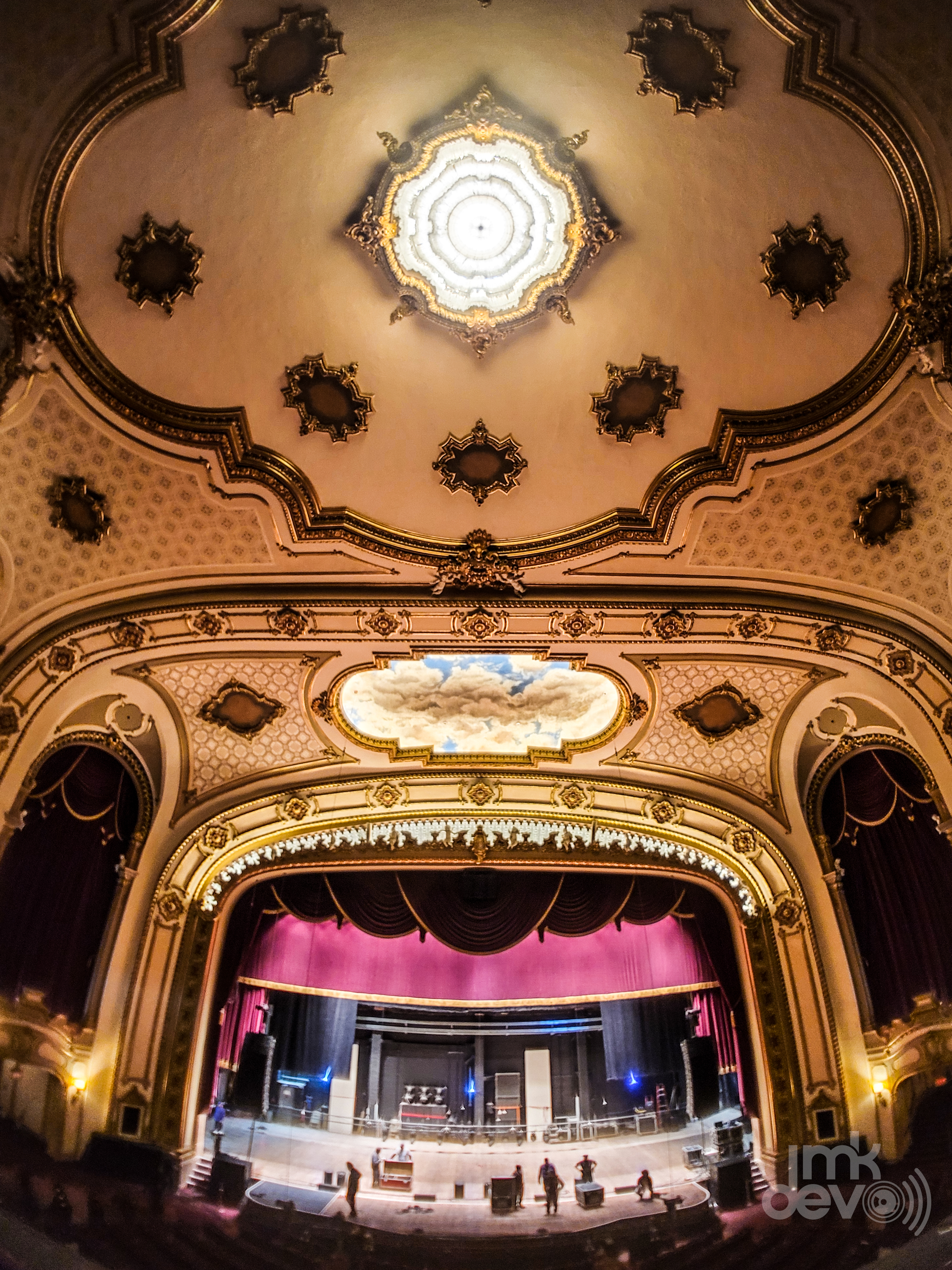
Palace Theatre

Description

Ornate venue for concerts and comedy shows, as well as movies shown on a large screen.

Social links

Events

December 2025
Card image
12/12/2025, 07:30 PM EST
Whiskey Myers

It would be an understatement to say that a lot has happened since Whiskey Myers was last in the recording studio. Over two whirlwind years, the gritty Texas band hit #1 on the iTunes Country Chart with their breakout third album 'Early Morning Shakes,'earned raves everywhere from Rolling Stone to USA Today, and toured the US and UK relentlessly, slaying massive festival crowds and sharing stages with Lynyrd Skynyrd, Hank Williams Jr., Jamey Johnson, and more along the way. You'd be forgiven, then, for expecting things to work a little differently this time around when the band reunited with acclaimed producer Dave Cobb for their stellar new album, 'Mud.' But as it turns out, success doesn't change a Southern gentleman, and they don't come any more Southern than Whiskey Myers. Fueled by larger-than-life performances honed tight from countless nights on the road, 'Mud' finds the band scaling new heights of songwriting and musicianship, with searing guitars, soulful vocals, and indelible hooks. While their approach to the music and humble, hard-working attitudes may not have altered, there have been developments in the Whiskey Myers world, most notably with the arrival of new faces. For the recording sessions, the band's five founding members—Cody Cannon on lead vocals and guitar, Cody Tate and John Jeffers on guitars, Gary Brown on bass, and Jeff Hogg on drums—fleshed out their sound with the addition of fiddler/keyboard player Jon Knudson and percussionist Tony Kent, who are both now full-time members. "They bring a great energy, and I think it's really helped our sound and makes the band more versatile," explains Cannon. "There's less room onstage now, but sometimes a family grows." A glance through Whiskey Myers' lyrics will show you that Cannon is a man who chooses his words carefully, so it's little surprise that he describes the band as a family. The tight-knit group's roots stretch back decades into the red dirt of East Texas, where Cannon, Jeffers, and Tate first began playing together before rounding out their initial lineup with the addition Hogg and Brown (who is Cannon's actual cousin). They built up a rabid local following on the strength of their 2008 debut album, 'Road Of Life,' and then notched their first #1 on the Texas Music Charts with their 2011 follow-up 'Firewater.' It was 'Early Morning Shakes,' though, that introduced the rest of the world to what Texas already knew. The album cracked the Top 10 on the Billboard Country Chart, a remarkable feat for a fiercely independent band and a testament to their rigorous DIY work ethic and endless supply of passion and drive. Esquire called them "the real damn deal," while Country Weekly said they combine "greasy Southern rock riffs with countrified songwriting and Texas grit for something wholly unique," and Playboy dubbed them "the new bad boys of country music." Even in the face of their rapidly-growing profile and expanding lineup, the band found they were able to pick up exactly where they left off when they returned to the studio for 'Mud.' "We don’t want a high stress situation, and we don’t want to feel uncomfortable while we're recording, because we want to make sure everybody can get into their creative mode," explains Brown. "Dave has a laid back attitude as far as making music and that fits right in with the way we work. His ear is similar to ours and he has the same kind of vision for what the music should sound like." What the music sounds like is raw, visceral emotion: pride, faith, desire, defiance. The songs on 'Mud' are stories of ordinary men and women standing up for their families and honoring their roots. Home is sacred ground for Whiskey Myers, not just a plot of land, but rather the cornerstone of an identity worth dying for. Fiddle-led album opener "On The River" steps back to frontier times when the struggle for survival was a daily one, while the epic title track promises a home-foreclosing banker "Ain’t no man gonna take it away / Because it's deep down in my blood / So step across the ol' property line / And you’ll die right here in the mud." "Frogman," written with Rich Robinson of the Black Crowes, follows a Southern man halfway around the world, as he risks his life to defend freedom and fight terror in the Middle East as a Navy Seal, and the Darrell Scott co-write "Trailer We Call Home" finds the beauty in simple things, concluding, "Times get tough but love is strong / Here in this trailer that we call home." "Where you come from and where you grew up influences your music a lot," says Cannon. "As a band, we don't go into the studio with any preconceived theme. You just sit down and you write and the songs come out naturally." As a result, Whiskey Myers' music fits neatly into no genre. Sure, it's heavily influenced by country music ("My first record was 'The Pressure Is On' / Ain’t it funny how your life can change with a song" Cannon sings on "Hank"), but the band credits everything from Alan Jackson and Waylon Jennings to Led Zeppelin and Nirvana as inspiration. "Some Of Your Love" channels old-school soul, while the bright, punchy horns of "Lightning Bugs And Rain" flirts with Rolling Stones swagger, and "Good Ole' Days" captures a stripped-down, folky vibe, as the whole band sat in a circle singing together live. It alladds up to what Cannon perhaps describes best as "no frills, no bullshit rock and roll." "The equipment we used on the recording process for this one was really important to the sound, too" he adds. "Dave has these amazing old amps and we recorded everything to tape for the first time. The piano was from, like, 1904 or something, and I don't think it's been tuned since. Little things like that make a big difference. It sounds authentic when you actually use the real, old gear." In the end, there may be no better word for Whiskey Myers than authentic. This music is in their blood, and it flows as naturally from them as a spring feeding a mountain creek. While a record this good is sure to send their (lone)star rising higher than ever before, you can rest assured that success still won't be changing this band any time soon. They make music they're proud of that celebrates where they come from and makes people feel good. As far as they're concerned, that's all the success anyone could ever ask for.

Card image
12/27/2025, 07:30 PM EST
moe.

Al Schnier (guitars, vocals) * Chuck Garvey (guitars, vocals) * Rob Derhak (bass, vocals) * Jim Loughlin (percussion, vibes) * Vinnie Amico (drums)Hailed by American Songwriter for their "mind-bending musicality," moe. is treasured for their mesmerizing musical synergy, unfettered showmanship, and smart, resonant songcraft. For three decades, the band has corralled myriad musical forms on a truly original journey rich with crafty, clever songwriting and astonishing resourcefulness. Fueled by an impassioned fan base, moe. has spent much of those thirty years on the road, encompassing countless live performances marked by eclectic wit, deep friendship, and exploratory invention. Having built an enduring legacy with hard work and a confirmed commitment to creativity and community, moe. seem as surprised as anyone to find themselves at such a significant landmark."The career just very subtly unfolded," says co-founding bassist-singer-songwriter Rob Derhak, "without any of us noticing it actually happened."Al Schnier (guitars, vocals), Chuck Garvey (guitars, vocals), and Derhak first came together at the University of Buffalo in 1990, musician-friends uniting to play for the sheer fun of it. The band followed a handful of cassette-only releases with 1992's FATBOY, recorded in an apartment studio above Buffalo's Top Shelf Guitars with a bird's eye view of Mighty Taco."We liked music, we liked to party, and we wanted to put those two things together," says Derhak. "We wanted to do what seemed like the coolest thing we could possibly do and not have to work a regular job. It didn't even seem like a decision had to be made. It's was like, this is what we're doing and it's happening. The idea that thirty years later I would be a dad, paying a mortgage and earning a living, based on our band, with the same guys no less, that never even crossed my mind."Finding themselves with an increasingly avid local following, moe. ventured forth, now with master rhythmatist Jim Loughlin among their ranks. The more the band traveled, the more they grew creatively, evincing a remarkable willingness to progress as they went along. moe. quickly became part of a burgeoning scene centered around NYC's Wetlands, a grassroots revolution that embraced freewheeling genre fusion -- spanning funk and free jazz, country and classic rock, prog, new wave, calypso, pop and everything else under the sun -- fan interaction, and unrestrained improvisation."We adapted," Derhak says. "Initially we didn't have quite as much of the same ideal at first. We didn't jam or have long extended solos. But as we went from being an opening act to being a headliner, we didn't have enough material to do two long sets. We needed more material so our songs started to stretch themselves out. We became a jam band."moe. widened its reach across America, earning new fans and national attention with their ingeniously imaginative interplay and a regularly growing catalogue. The band spent almost as much time in the studio as they did on the road, mastering their delightfully vibrant blend of inventive musicality and genre-blurring reach on now-classic LPs like 1998's TIN CANS & CAR TIRES, 2004's WORMWOOD, 2007's THE CONCH (which reached #1 on Billboard's "Heatseekers" chart), and 2012's critically acclaimed WHAT HAPPENED TO THE LA LAS. As if all that weren't enough, the moe. canon -- released largely through their own Fatboy Records, as well as via two label deals, one major, the other independent -- further includes a wide range of archival live releases (including 2000's L), a Christmas album, even a re-recorded collection of greatest hits.2020's THIS IS NOT, WE ARE -- the band's 12th studio album and first since 2014's NO GUTS, NO GLORY -- includes eight new songs, most of which were road tested over the past two years of touring. In addition, the LP features one song making its first appearance anywhere, the Garveypenned "Undertone." Self-produced by the band, THIS IS NOT, WE ARE sees moe. once again pushing their music forward while simultaneously rifling through their back pages on songs like Derhak's nostalgic "Skitchin' Buffalo" and the Al Schnier composition, "Crushing.""Our musical paths have diverged so many times," Derhak says. "All of our original influences became part of what we were at the time and then as we played, our sound kind of just grew. It changed with the landscape of the music business and it changed with what we were listening to. For example, some of our albums further down the road reflect a much stronger Americana influence. It's like, all of the things that we've learned in the past thirty years, all the things that we've done, have sort of come full circle.""We're a better band now," Amico -- who came aboard in 1996 and has remained behind the kit ever since -- says. "The reality is, you spent thirty years with people doing what you do, you get better. There's no ifs, ands or buts about it. Your ears get more trained, your playing gets better and better, your ability to communicate with each other better."That preternatural interplay was of course honed through night after night, week after week, of on-stage togetherness. moe. is truly a live band, rightly adored by a fervent following for their epic concert performances, each one imaginatively improvisational, rhythmically audacious, and utterly unique. Indeed, the band has spent much of its 30-year career on the road, including innumerable headline tours, international festival sets from Bonnaroo to Japan's famed Fuji Rock, music-themed cruises, and sold-out shows alongside such like-minded acts as the Allman Brothers Band, Robert Plant, members of the Grateful Dead, Dave Matthews Band, The Who, Gov't Mule, and Blues Traveler, to name but a few. As if that weren't enough, moe. has both promoted and headlined at multiple festivals of their own, including snoe.down and moe.down."We built our own career," Amico says, "where we are able to play places like Radio City or the Fox Theater in Atlanta, playing SPAC (Saratoga Performing Arts Center), my hometown venue where I saw concerts as a kid. We've played Red Rocks eight times or nine times or however many times we've played it. The fact that we built a career that we've played these places and have sustained playing these places, it's huge."That illustrious career path has been supported and nourished by the band's ever-growing legion of devoted fans and followers, known lovingly as moe.rons. With their astonishing prolificacy and awe-inspiring longevity, moe. is among the rare bands that somehow manage to transcend time and trend to be passed down from one generation to the next."We've never been the kind of band where you're one-and-done," Amico says. "People have gotten married and had kids, now those kids are listening to us.""There are people who have been with us right from the beginning in Buffalo," Derhak says. "Which is insane. But the thing is, we pick up people along the road. There are people who say, I've resisted listening to this band for years and then I finally did -- I can't believe I've wasted my time not listening to them for so long. Now they're like, I need more albums, I need more shows."Impossible to pigeonhole as anything other than simply moe., this one-of-a-kind band has never been easily categorized, their sonic adventurousness and tongue-in-cheek humor distinctly and undeniably their own. Despite current circumstances, moe. is celebrating their milestone anniversary with characteristic self-deprecation and wistful optimism. Here's to the next thirty."Thirty years is a long run," Derhak says, "to be with the same guys. I haven't even been married for thirty years. ""You just don't think about thirty years down the line when you're starting out," Amico says. "I mean, you kind of do because that's what you want to be doing for the rest of your life. Here we are, thirty years later -- I've had this job longer than I probably would've had any job in the real world."

Contacts

19 Clinton Ave, Albany, NY 12207, USA