profile avatar

Music Box

Description

Upscale venue for live music events, featuring a dance floor and multiple bars.

Events

February 2026
Card image
02/27/2026, 09:00 PM PST
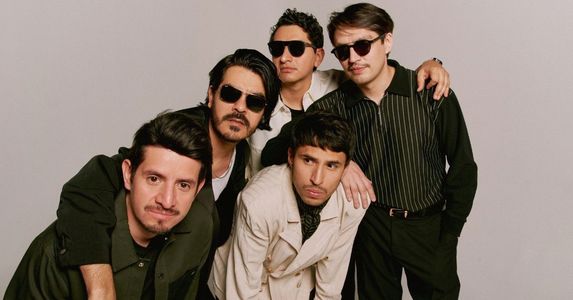
Ozomatli (21+ Event)

In their eighteen years together as a band, celebrated Los Angeles culture-mashers Ozomatli have gone from hometown heroes to being named U.S. State Department Cultural Ambassadors.Ozomatli has always juggled two key identities: they are the voice of their city and they are citizens of the world.Their music - a notorious urban-Latino-and-beyond collision of hip hop and salsa, dancehall and cumbia, samba and funk, merengue and comparsa, East LAR&B and New Orleans second line, Jamaican ragga and Indian raga - has long followed a key mantra: it will take you around the world by taking you around L.A.Originally formed to play at a Los Angeles labor protest, Ozomatli spent their early days participating in everything from earthquake prep “hip hop ghetto plays” at inner-city elementary schools to community activist events, protests, and city fundraisers. Since then, they have been synonymous with their city: their music has been taken up by MLB’s Los Angeles Dodgers and the NBA’s Los Angeles Clippers, they recorded the travelogue “City of Angels” as a new urban anthem, and they were featured as part of the prominent L.A. figures imaging campaign “We Are 4 L.A.” on NBC-TV. Ozomatli also have the distinction of headlining the Hollywood Bowl three times, in 2008, 2010 and 2012. In recognition of their efforts, the City of Los Angeles has officially declared every April 23rd in perpetuity as “Ozomatli Day”.On the national stage, the band were recognized for their service not just to Los Angeles but as global activists, receiving the National Council of LA Raza's Humanitarian Award, and performing twice for President Barack Obama.“This band could not have happened anywhere else but L.A.,” saxophonist and clarinetist Ulises Bella has said. “Man, the tension of it, the multiculturalism of it. L.A. is like, we’re bonded by bridges.”Ozomatli is also a product of the city’s grassroots political scene. Proudly born as a multi-racial crew in post-uprising 90s Los Angeles, the band has built a formidable reputation over five full-length studio albums as well as a relentless touring schedule.“Just being who we are and just doing what we’re doing with music at this time is very political,” says bassist Wil-Dog Abers. “The youth see us up there and recognize themselves. So in a playful, party-type of way, I think it’s real easy for this band to get dangerous. We are starting to realize just how big of a voice we actually have as a band and how important it is for us to use it."Several years ago, the reach and power of that voice went to new global heights. The band had long been a favorite of international audiences-playing everywhere from Japan to North Africa and Australia-and their music had always been internationalist in its scope, seamlessly blending and transforming traditions from Africa, Latin America, Asia and the Middle East (what other band could record a song once described as “Arabic jarocho dancehall”?), but that year they entered the global arena in a different way.They were invited by the U.S. State Department to serve as official Cultural Ambassadors on a series of government-sponsored international tours to Asia, Africa, South America, and the Middle East, tours that linked Ozomatli to a tradition of cultural diplomacy that also includes the esteemed likes of Duke Ellington, Benny Goodman, and Louis Armstrong.In places like Tunisia, Egypt, India, Jordan, and Nepal, Ozo didn’t just play rousing free public concerts, but offered musical workshops and master classes and visited arts centers, summer camps, youth rehabilitation centers, and even a Palestinian refugee camp. They listened to performances by local musicians and often joined in for impromptu jam sessions with student bands and community musicians. Most shows ended up with kids dancing on stage and their new collaborators sitting in for a tabla solo or a run on the slide guitar.
In the case of Nepal, the band’s trip was part of a celebration of the country’s newly ratified peace accord. Their concert, which drew over 14,000 people, was a historic one. Ozo were the first Western band to do a concert in Nepal, and the event was the country’s first peaceful mass gathering that was not a protest or religious ceremony.  They then went on to be the first contemporary western band to play public concerts in Mongolia (drawing a crowd of 25,000), and to perform in Myanmar during the height of military rule.Ozomatli also traveled to China, South Africa, Madagascar, Vietnam and Thailand performing free concerts and extending humanitarian outreach, including HIV and AIDS care clinics, visits to schools for the blind and deaf, orphanages, Methadone clinics, and outreach programs to refugees and disadvantaged youth.Ozomatli were honored to accompany the Boston Symphony Orchestra. Celebrating the Pops 125th Anniversary. Since that first orchestral collaboration, they have gone on to perform Ozo classics live with the National Symphony Orchestra at the Kennedy Center, the Colorado Symphony, the San Diego Symphony, and the New York Pops.Ozomatli made an appearance at TEDxSF – the first musical talk ever given at any TED conference - mixing discussion and sound to explore the challenges and promises of musical identities in a global age.
In addition to their substantial history licensing their music for film, television and video games, the band has also gone on to compose and score, recently contributing music to Happy Feet 2 and Elmo's Musical Monsterpiece for Warner Brothers Interactive, SIMS for EA Games, music for PBS Kids, the motion pictures A Better Life and Harlistas, and Gabriel Iglesias Presents Stand-Up Revolution on Comedy Central.The past few years have seen the band focused on Ozomatli Presents “Ozokidz”, a special family friendly set geared towards performing for children and adults alike. The album, released on Hornblow Recordings in fall of 2012 has been recognized by the media as a standout release in the children’s music genre, with plaudits coming from NPR, the Los Angeles Times, USA Today, New York Daily News, iTunes and more.

March 2026
Card image
03/01/2026, 08:00 PM PST
Yellow Days

Noted for throaty, yearning vocals that accompany his swimmy indie soul-pop, Yellow Days is the performance alias of British musician George van den Broek. After some early releases during his teenage years, he began to gain traction with 2017’s full-length Is Everything Okay in Your World? Switching locales to Los Angeles, his follow-up, A Day in a Yellow Beat, appeared in 2020. Two years later, the pandemic-inspired EP trilogy Slow Dance & Romance, Apple Pie, and Inner Peace was steeped in psychedelic soul. Born in Manchester, England, and raised in Haselmere, van den Broek’s musical endeavors began when he got a guitar for Christmas at the age of 11. With influences that include Ray Charles, Mac DeMarco, and Thundercat, he started releasing stand-alone singles as a teen in late 2015. His debut EP, Harmless Melodies, arrived in November 2016. Yellow Days continued to release periodic singles in 2017, some of which appeared on his debut LP, Is Everything Okay in Your World?, that October. It featured a guest spot by hip-hop artist Rejjie Snow. Early the next year, “Gap in the Clouds,” from his first EP, reached a broader audience when it accompanied the trailer for the second season of Donald Glover’s show Atlanta. Yellow Days followed up in April 2018 with the single “The Way Things Change” and a week’s worth of club shows in the U.S. that quickly sold out, before continuing the tour in Europe. The musician’s sophomore effort arrived in 2020: titled A Day in a Yellow Beat, the project was written and recorded primarily in L.A., with van den Broek sourcing new inspiration from local collaborators. Yellow Days’ next undertaking was a set of three self-produced EPs released throughout 2022 and consisting of a combined 17 songs. Slow Dance & Romance began the series in April, with Apple Pie following in July, and Inner Peace closing out the project in September. Conceived and recorded during the early part of the COVID-19 pandemic, they were said to represent a catalog of his “mindset in lockdown.” ~ Marcy Donelson

Card image
03/04/2026, 08:00 PM PST
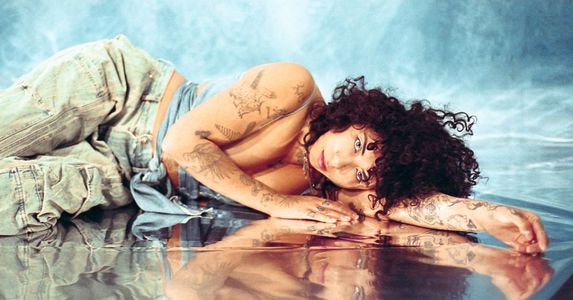
Indigo De Souza

There are moments standing on a high ledge where wild space beckons. In that moment, instinct stirs: “What if I just jumped?” It’s been described as “the call of the void,” an experience somehow more primal than even feeling or urge. On her new album, Precipice (due July 25th via Loma Vista), Indigo De Souza looks over the creative and spiritual cliff and just leaps. The North Carolina native is a prolific, poetic singer-songwriter who already has three albums and four EPs in just seven years, with her most recent full-length (2023's All of This Wild End) earning rave reviews for her daring vocals and thrilling songwriting. But on her latest, De Souza hears the void calling and calls back, taking control of difficult memories and charged emotions via pop bombast and diaristic clarity, and finding a stronger self. “Life feels like always being on the edge of something without knowing what that something is,” the singer-songwriter says. "Music gives me ways to harness that feeling. Ways to push forward in new directions." On the album’s title track, De Souza faces down the potential darkness of change, and finds hope in surrendering: "Coming to a precipice/ Holding on for dear life/ Looking out into the world/ Everything has gone dark." That sort of emotional daredevilry is definitively not new for De Souza. Her catalog brims with unwavering honesty and unflinchingly personal songwriting, including most recently the familial excavation on the pained and mighty All of This Will End. “I feel constantly on the precipice, of something horrible, or something beautiful–something that will change my life for better or for worse,” De Souza muses. To that end, Precipice cracks De Souza’s world open. As a new challenge, the songwriter took on blind studio sessions in Los Angeles, reveling in the expanded pool of collaborators and ability to focus on music. “I’d been wanting to work on more pop-leaning music for a while, so when I came out to LA I made sure to meet with people that could help bring that to life,” she says. “I wanted to make music that could fill your heart with euphoria while you dance along.” In those sessions, she made a quick and deep connection with producer Elliott Kozel—a musician who has produced and collaborated with the likes of SZA and Yves Tumor, not to mention scoring TV with FINNEAS. The two quickly got to work on album highlight “Not Afraid”, the track setting the tone for the album's bold defiance of the unknown. “What, what does it look like, when you are free?/  When you are being true?/ When you let go, the people you love are free when they’re with you too,” she sings. The track also signaled the start of a long and important collaboration. “Elliott is really good at allowing space for songs to reveal themselves, and I felt very seen and respected both musically and personally,” De Souza adds. “That song became a compass for what I wanted the album to be: pop songs with meaning and feeling, pop songs with lyrics that tap into raw humanity.” Lead single “Heartthrob” exemplifies the ecstatic duality the pair found, a way to both bring immediate energy and thoughtful depth. The track is a fanged rebuke of those who exploit and prey on young people, delivered in panoramic indie rock glow. Multi-instrumentalist Jesse Schuster’s chugging guitar riff pushes De Souza’s delivery into a headrush, her voice wavering somewhere between pain and fury. "God, when I’m a grown up/I wanna have a full cup/A true heartthrob," she shakes, a satirical jab at the false safety that some adults can exude and an honest cry to inspire light and freedom in the people she loves. "I’ve lived through harmful experiences in my past that are helpful to process through music.” De Souza says. “A way to remind myself that I am still a full human being" As with so much great pop, Precipice transcends the giddy highs of new attraction and the haunted lows of a broken heart. But true to her idiosyncratic approach, De Souza somehow manages to invert and subvert both, finding their points of connection rather than their differences. The thrumming synthpop of “Crying Over Nothing” exemplifies those new, glistening heights musically, even as the lyrics digest unimaginable heartbreak. De Souza skips over the coyly shuffling rhythm, her voice cracking into the upper register with a warm glow akin to the ‘80s synths. “There’s some pain that follows no matter where you go or how much you try to lose it, pain that comes from memories you can’t erase and love you can’t unfeel,” she says. "This song is about the one that got away. That feeling of being haunted by loss." The Robyn-esque “Crush” follows, a sugar burst that subtly weaves its way across the dance floor. “Come up to get some air/ It’s like you're playing solitaire/ So good to see your face/ I was missing you when you were down there,” she sways, the knowing grin practically beaming through the track. The embodiment of catching feelings, “Crush” rides a gritty snap-pop drum loop from percussionist Jonathan Smith and tingly synth prickles. “I remember thinking about how, in the same way that I sometimes have to talk new lovers through eating me out, I also have to help them understand how to care for me in ways that make me feel good and seen,” De Souza blushes. But of course even the most hypercharged crushes can crumble—and the sighing “Heartbreaker” was written when the person she was falling for on “Crush” eventually broke her heart. While De Souza’s voice acrobatically flickers across the rest of the album, here she delivers this pained memory more simply, with her full throat: “When I wake up, still thinking that you’re there/ And it all comes flooding back to me, I’m living in a nightmare,” she cries, churning piano and ghostly guitar floating in the edges. “I was broken up with, and I flew out to LA as quickly as possible so I could get to the studio to make a song instead of being at home, sad and lashing out,” De Souza recalls. “My heart was fully soaked in poisonous pain, and I am deeply grateful for the creative space to process what I was feeling.” On album highlight “Be Like the Water”, there are times where you can practically feel the tears dripping on the microphone. But rather than mourning, these are tears of awe, a song of amazement at the possibility of living truly and on your own path. “It’s about being brave and protecting your energy, following your gut,” De Souza says. “It’s a reminder that you can always follow your heart and your spirit, but you can also make boundaries and choose your own direction.” To achieve that spiritual depth, Kozel’s production bends between mantric ethereality and golden Americana. Spectral synth tones and finger chimes play like a yogic drone, while gleaming organ puts a direct frame on De Souza’s verses. “I won't be sorry/ And I won't be silent/ I'm temporary/ I am an island," she sings, her ownership of herself overcoming the pains that pervade the album. There are points in life where the precipice feels furthest from our control—something De Souza faced in late 2024, as Hurricane Helene ravaged the East Coast of the United States. Though her recently finished album showed the buoyant joy of change, De Souza’s flooded home and destroyed belongings represent its potential tragic side. When not in the thick of clearing the mess and helping her community recover, she continued to return to music as a comfort, already having written another album worth of breathtaking songs. Even when the void seems darkest, De Souza leaps boldly—and on Precipice she soars through wild, uncharted territory with open eyes, a full heart, and gritted teeth, finding new beauty even further beyond.  

Card image
03/05/2026, 08:00 PM PST
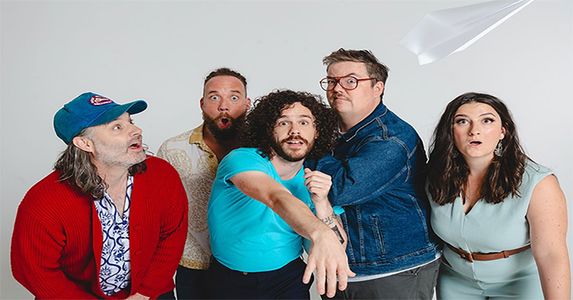
The Strumbellas

Ever since forming in 2008 and releasing their debut album, 2012’s My Father and the Hunter, two-time JUNO award-winning alternative group The Strumbellas have steadily released  follow-ups containing every ounce of stomping, hand-clapping, alt-country gusto, from 2013's We Still Move on Dance Floors to 2016's Hope to 2019's Rattlesnake.  They’ll soon round the corner with a brand-new fifth studio album, Part Time Believer, a collection that signals The Strumbellas’ grand return and rebirth. Now with Jimmy Chauveau on board as lead vocalist, The Strumbellas spent the last four years writing, recording, and whittling 50 songs down to 12. Honed by producers Ben Allen (Gnarls Barkley, Kaiser Chiefs), Keith Varon (Machine Gun Kelly), Stevie Aiello (30 Seconds To Mars), and Dave Schiffman (RHCP, The Killers), Part Time Believer continues The Strumbellas’ long-standing tradition of blending anthemic, brightly coloured compositions with yearning, contemplative lyrics. “I think people often feel like things are escaping them, or they're trying to grab on to something — happiness, gratitude, professional or personal goals — and for some reason, they just can't get there,” says David Ritter, who handles piano, organ, percussion, and vocals. “Even if they get the thing they want, it doesn't feel the way they thought it would. A lot of these songs are about trying to, like, figure out why we're all feeling this way, and how we can find more peace in our lives.”

Card image
03/11/2026, 08:00 PM PDT
Band of Skulls

Too many careers in rock'n'roll are sprints rather than marathons. Few artists make it past their debut album without having already squandered their life's quota of creative ideas. Fewer still make it to four albums in without hitting some kind of existential crisis, without losing direction, or going on autopilot and resorting to the same old tricks to keep a dwindling fan-base interested. Meet Band of Skulls, then, whose fourth album, By Default', is the sound of a group on the sharpest form of their career, more engaged and focused than they've ever been. An album that electrifies with rock'n'roll cut back to its most vivid elements, focusing all their brawny power and maverick invention into choruses, hooks and expertly-sculpted three-minute bursts so unashamedly anthemic and accessible they'll soundtrack this summer, and far beyond. "It's definitely a new era," says guitarist/vocalist Russell Marsden. "The first three records were like a trilogy, a piece of work in themselves. We wanted to do those things, and we did them all. We took a breath, took a look at what we'd done, and started from scratch again." "We hadn't stopped since releasing our first album in 2009," remembers Matt. Their new contract with BMG Recordings bought them breathing space, time to reflect on where they'd been creatively - and where they wanted to go next. They hired rehearsal space in Central Baptist Church in Southampton, and loaded in the barest bones of equipment - some ratty old practice amps, Matt's dad's drum-kit from the 1960s; "Even shit songs sound impressive on expensive gear," explains Russell, of the spartan set-up - and started work on writing a new future for Band of Skulls. "We went back to Square One," smiles Matt. "It felt new and exciting again." In the church - between visits from the vicar, bringing tea and biscuits on his trolley - they found the new songs in hours of woodshedding, each member bringing new ideas into the room, which the band studied with unforgiving ears. "We're pretty merciless," says Russell, of this process. "We're emotional about it - we get mad. We get mad at each other, at ourselves. We care about it. We were looking to challenge ourselves, to surprise each other." Indeed, as they rehearsed and rewrote the new material, Band of Skulls stalked far outside their comfort zone, hammering out their own version of techno music on their primitive instruments, or writing songs around the spectral sound of hands clapping in the natural reverb of the church. After accumulating a sackful of new tunes that had withstood their punishing audition process, the group went into the studio with legendary producer Gil Norton (Pixies, Foo Fighters, Patti Smith) to commit the new songs to tape. They brought with them sounds sampled in the church, to preserve the magical ambience they'd discovered. They also brought with them some of their strongest songs yet - from the primal brilliance of opener Black Magic and the irresistible dynamics of Killer, to the slow-burning drama of the powerful Embers, to the razor-edged funk of So Good, to the swaggering, steroidal, futurist blues-rock of Little Mama. Norton helped them polish the raw material; more often, though, he encouraged further excursions into the unknown, like the wild freakout that scores the muscular rhumba of Tropical Disease. The band's drive, their passion for reinvention - their reluctance for simply following the same beaten path - should come as no surprise to anyone who's been following Band of Skulls' movements thus far. They formed just over a decade ago after Marsden and drummer Matt Hayward (who, from a young age, spent every Saturday morning making a righteous racket together after their folks recognised their love for music was more than just a passing thing) joined forces with bassist/singer Emma Richardson. From the off, Band of Skulls were different. They had two lead singers, and all three were songwriters. "We had high ambition," remembers Russell. "We wanted to tour, to make albums, to be in it for the long run. We were never in a rush for an instant fix, it was never a scene thing; we were always outsiders, the three of us banded together, but all of us battling for the spotlight." There's a key moment in the Band of Skulls story that illustrates their drive, the sense of purpose that's set them apart from their contemporaries. In America to complete work on what would become their 2009 debut album Baby Darling Doll Face Honey', they lit out for their first American tour. But this was no whistle-stop visit to New York and Los Angeles and then back home: instead, the group elected to play every city they came across until they'd completed a circuit of the Americas. "We'd paid our dues, played all over Britain, and were looking for a new challenge," says Russell. And a challenge it most certainly was. Their only calling card was debut single, I Know What I Am, which had been given away free as iTunes' first-ever Single Of The Week; they used this notoriety to book a slew of tiny gigs across America, and proceeded, as Russell puts it, to "knock those small gigs over one-by-one". There was no Plan B', no safety net; either Band of Skulls succeeded over those months as a touring band in America, or the game was over. Not only did Band Of Skulls make a triumph of that first circuit of America's vast expanse, they completed a second victory lap of larger venues before returning home to the UK, establishing a momentum that carried them through three acclaimed albums - Baby Darling Doll Face Honey', 2012's Sweet Sour' and 2014's Himalayan' - and further long tours across the globe (Matt reckons they spent no more than a month off the road during this era). By Default' is an album of which Band of Skulls are understandably proud, but the group know it is more than just their latest record; it's also the gateway to their future. "This album could have been fifty songs, each one a minute long, because we had so many ideas" says Russell, hinting that the group's fearsome pace and creative stamina are far from exhausted. Now, the band's focus is taking these new songs on the road, to play them before audiences. "For us, it's like a tightrope thing," says Matt. "Like, can we pull off this trick" Smart money says they can, with a killer flourish. "We're proud of this new album we've made," adds Russell. "We hope it bursts out of the speakers to make that clear."


Contacts

1337 India St, San Diego, CA 92101, USA