profile avatar

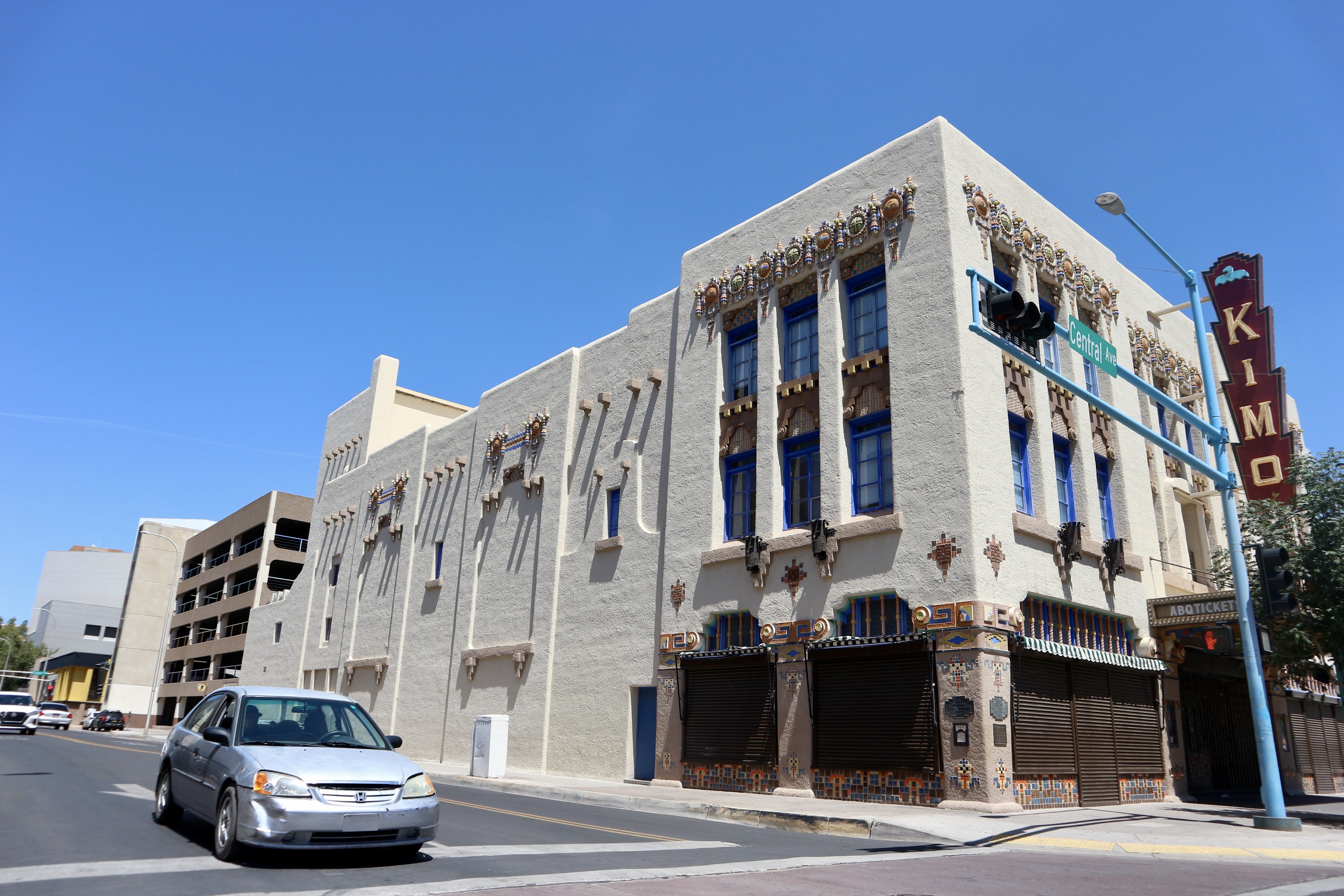
Kimo Theatre

Description

Intimate performing arts theater with Southwestern and Native American motifs and live shows.

Events

March 2026
Card image
03/24/2026, 07:30 PM MDT
Pink Martini

In 1994 in his hometown of Portland, Oregon, Thomas Lauderdale was working in politics, thinking that one day he would run for mayor. Like other eager politicians-in-training, he went to every political fundraiser under the sun… but was dismayed to find the music at these events underwhelming, lackluster, loud and un-neighborly. Drawing inspiration from music from all over the world – crossing genres of classical, jazz and old-fashioned pop – and hoping to appeal to conservatives and liberals alike, he founded the “little orchestra” Pink Martini in 1994 to provide more beautiful and inclusive musical soundtracks for political fundraisers for causes such as civil rights, affordable housing, the environment, libraries, public broadcasting, education and parks. One year later, Lauderdale called China Forbes, a Harvard classmate who was living in New York City, and asked her to join Pink Martini. They began to write songs together. Their first song “Sympathique (Je ne veux pas travailler)” became an overnight sensation in France, was nominated for “Song of the Year” at France’s Victoires de la Musique Awards, and to this day remains a mantra (“Je ne veux pas travailler” or “I don’t want to work”) for striking French workers. Says Lauderdale, “We’re very much an American band, but we spend a lot of time abroad and therefore have the incredible diplomatic opportunity to represent a broader, more inclusive America… the America which remains the most heterogeneously populated country in the world… composed of people of every country, every language, every religion.” Featuring a dozen musicians, with songs in 25 languages, Pink Martini performs its multilingual repertoire on concert stages on six continents. After making it’s European debut at the Cannes Film Festival in 1997 and its orchestral debut with the Oregon Symphony in 1998, the band has gone on to play with more than 50 orchestras around the world, including multiple engagements with the Los Angeles Philharmonic at the Hollywood Bowl, the Boston Pops, the National Symphony at the Kennedy Center, the San Francisco Symphony, the Cleveland Orchestra, and the BBC Concert Orchestra at Royal Albert Hall in London. In 2014, Pink Martini was inducted into both the Hollywood Bowl Hall of Fame and the Oregon Music Hall of Fame. Pink Martini has released 11 studio albums on its own independent label Heinz Records (named after Lauderdale’s dog), selling over 3 million albums worldwide. In 2019, the band released two EPs featuring the vocals of Pink Martini’s newest members Jimmie Herrod and Edna Vazquez. Both vocalist have toured with the band for the past year and are officially part of the group with the release of Herrod’s EP Tomorrow and Vaquez’s Besame Mucho, both of which were co-produced by Thomas Lauderdale and China Forbes.

April 2026
Card image
04/09/2026, 07:30 PM MDT
Al Di Meola

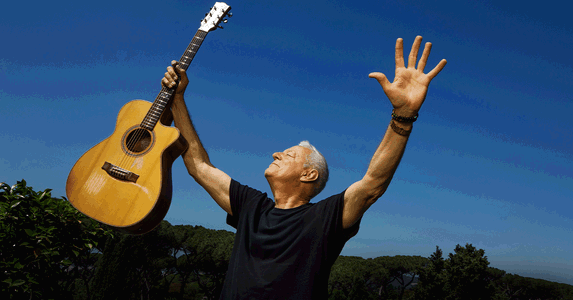
Al Di Meola's ongoing fascination with complex rhythmic syncopation combined with provocative lyrical melodies and sophisticated harmony has been at the heart of his music throughout a celebrated career that has spanned four decades and earned him critical accolades, three gold albums and more than six million in record sales worldwide. A bona fide guitar hero, perennial poll-winner, and prolific composer, he has amassed over 20 albums as a leader while collaborating on a dozen or so others with the likes of the fusion supergroup Return to Forever (with Chick Corea, Stanley Clarke and Lenny White), the celebrated acoustic Guitar Trio featuring fellow virtuosos John McLaughlin and Paco de Lucia, and the Rite of Strings trio with bassist Clarke and violinist Jean-Luc Ponty. And while his dazzling technique on both acoustic and electric guitars has afforded him regal status among the hordes of fretboard fanatics who regularly flock to his concerts, the depth of Di Meola's writing along with the soulfulness and the inherent lyricism of his guitaristic expression have won him legions of fans worldwide beyond the guitar aficionado set. A pioneer of blending world music and jazz, going back to early Latin-tinged fusion outings like 1976's Land of the Midnight Sun, 1977's Elegant Gypsy and 1978's Casino, the guitar great continues to explore the rich influence of flamenco, tango, Middle Eastern, Brazilian and African music with his World Sinfonia, an ambitious pan-global group that he formed in 1991. Their exhilarating world music fusion has been documented on such releases as 2000’s The Grande Passion (featuring the Toronto Symphony Orchestra), 2007’s Live in London, 2011’s Pursuit of Radical Rhapsody and the stunning 2012 DVD, Morocco Fantasia (recorded at the Mawazine Festival in Rabat, Morocco and featuring special guests Said Chraibi on oud, Abdellah Meri on violin and Tari Ben Ali on percussion). Growing up in Bergenfield, NJ with the music of Elvis Presley, The Ventures and The Beatles, Di Meola naturally gravitated to guitar as a youngster and by his early teens was already an accomplished player. Attaining such impressive skills at such a young age didn't come easy for Al, but rather was the result of focused dedication and intensive periods of woodshedding between his junior and senior years in high school. “I used to practice the guitar eight to ten hours a day,” he told Down Beat. “And I was trying to find myself, or find the kind of music that suited where I was going with the guitar.”                                                His earliest role models in jazz included guitarists Tal Farlow and Kenny Burrell. But when he discovered Larry Coryell, whom Al would later dub “The Godfather of Fusion,” he was taken with the guitarist's unprecedented blending of jazz, blues and rock into one seamless vocabulary on the instrument. “I used to ride the bus from New Jersey to see him at little clubs in Greenwich Village,” he recalls. “Wherever he was playing, I'd be there.”  In 1972, Al enrolled at the Berklee College of Music in Boston and by the second semester there began playing in a fusion quartet led by keyboardist Barry Miles. When a gig tape of that band was later passed on to Chick Corea by a friend of Al's in 1974, the 19-year-old guitarist was tapped to join Corea’s fusion supergroup Return to Forever as a replacement for guitarist Bill Connors. After three landmark recordings with Return to Forever -- 1974's Where Have I Known You Before, 1975's Grammy Award winning No Mystery and 1976's Romantic Warrior -- the group disbanded and Al subsequently started up his career as a solo artist. His 1976 debut as a leader, Land of the Midnight Sun, was a blazing showcase of his signature chops and Latin-tinged compositions that featured a stellar cast including drummers Steve Gadd and Lenny White, bassist Anthony Jackson and Jaco Pastorius, keyboardists Jan Hammer, Barry Miles and Chick Corea and percussionist Mingo Lewis. Over the course of six more albums with Columbia Records – Elegant Gypsy, Casino, Splendido Hotel, Electric Rendezvous, Tour De Force and Scenario – Al established himself as an influential force in contemporary music. 1980 marked the triumph of the acoustic guitar trio with Paco De Lucia and John McLaughlin. Their debut recording on Columbia Records, Friday Night in San Francisco, became a landmark recording that surpassed the four million mark in sales. The following year, 1981, Di Meola was inducted into Guitar Player’s Gallery of Greats after five consecutive wins as Best Jazz Guitarist in the magazine’s Readers Poll and winning best album and acoustic guitarist for a total of a record eleven wins. The three virtuosos in the trio toured together from 1980 through 1983, releasing the studio album Passion, Grace & Fire in 1982. In 1995, they reunited for a third recording, Guitar Trio, follow by another triumphant world tour. In early 1996, Di Meola formed a new trio with the violinist Jean-Luc Ponty and RTF bandmate Stanley Clarke called The Rite of Strings. Their self-titled debut was released in 1995. Di Meola subsequently recorded with the likes of opera superstar Luciano Pavarotti, pop stars Paul Simon, classical guitarist Manuel Barrueco,  and Italian pop star Pino Daniele. Over the course of his career, he has also worked and recorded with Phil Collins, Carlos Santana, Steve Winwood, Wayne Shorter, Tony Williams, Herbie Hancock, Gonzalo Rubalcaba, Milton Naciemento, Egberto Gismonti, Stevie Wonder, Les Paul, Jimmy Page, Steve Vai, Frank Zappa and Cuban pianist Gonzalo Rubalcaba. Di Meola’s 2013 release, All Your Life, was an acoustic tour de force that had him revisiting the music of a seminal influence – The Beatles. “I really credit the Beatles for the reason why I play guitar,” he says. “That was a major catalyst for me to want to learn music, so their impact was pretty strong.” A virtual one-man show of virtuosity, it features the guitar great interpreting 14 familiar Beatles tunes in the stripped-down setting of strictly acoustic guitar. While currently juggling acoustic tours in Europe and electric tours in the United States, Di Meola arrives at the perfect marriage of the two aesthetics on his latest album, 2015’s Elysium, which finds the guitar great blending the lush tones of his nylon string Conde Hermanos acoustic prototype model and a ’71 Les Paul electric (his Return to Forever and Elegant Gypsy axe) in a collection of songs that are at once invigorating and alluring. “It represents a new composition phase for me, whereby the writing became, in a sense, my therapy during a challenging personal transition in my life," he said.   Di Meola is currently on tour in Europe and North America. This summer, he will be honored as the 22nd recipient of the Montreal Jazz Festival’s Miles Davis Award, created in 1994 to honor a great international jazz musician for the entire body of his or her work and for that musician’s influence in regenerating the jazz idiom. During a 40-plus year career marked by hugely influential recordings and worldwide tours, Di Meola has regenerated the jazz idiom three times over while dedicating himself to his art. And at age 60, this guitar hero seems inspired to begin a new chapter in his career with the release of Elysium.

Card image
04/11/2026, 07:00 PM MDT
Benise - 25 Years of Passion!

Rarely is an artist capable of touching the hearts and souls of people of all ages, cultures, and diverse musical backgrounds as BENISE (pronounced Buh-nes-say).  For Benise, music has always been a journey…from his humble beginnings as a street performer, to performing around the world. “I wanted to push the boundaries of traditional Nuevo Flamenco/Spanish guitar while combining the elements of dance and theater. This show is a celebration of Music, Love, and Life,”comments composer, virtuoso guitarist and creative force behind the event, BENISE.     ‘The Prince of Spanish Guitar’  - Dancing With The Stars     ‘Bennissimo!’ - Chicago News     ‘Extreme Flamenco Fusion’ - Screen India     Since the age of eleven (when he received his first guitar), BENISE practiced relentlessly, completely self-taught, mastering a variety of different styles that were eventually to become his own unique sound. Though unable to read a single note, he began composing original works with powerful emotional arrangements that are both wild and refined, producing a sound that is as edgy and exotic as it is romantic and sensual. “I’m always inspired by places I’ve traveled,” says BENISE, “so I’ll try to capture the essence and beauty of the different places in my melodies. It’s truly like painting on air--creating colors and lush soundscapes that take people (and me) away to a safe place with no prejudice and no boundaries.”     Leaving his family and friends in the Midwest to move 1500 hundred miles away from home to Los Angeles with nothing more than his guitar, he held in his heart the encouragement from his parents to “work hard and have faith.”     After being turned down by almost every club in Los Angeles, BENISE started performing on the streets. It was not uncommon for BENISE to put on over 200 shows a year, sometimes playing 2 to 3 events in a single day. Tourists from around the world and native Angelinos alike took to BENISE like the “Pied Piper” of Spanish guitar. From there, the path of his music took on a life of its own, effortlessly opening doors along the way to attract musicians, dancers and cirque performers, eventually creating the extended family that is now known simply as his namesake, “BENISE.”     BENISE started to promote his own concerts, selling out 2,000 seat theaters through Southern California. A natural performer, BENISE held audiences captive with exotic drums, Gypsy violin, Flamenco dancers, Cirque performers, Brazilian Samba dancers and percussionists, African tribal drummers, Havana horns, and brilliant theatrical lighting to create and unforgettable experience.     In addition to organizing stunning live shows, BENISE took his career by the reins by producing, arranging and releasing 13 albums on his own independent record label, Spanish Guitar Entertainment, plus 5 DVDs. The recordings capture the expressive Spanish guitar arrangements that stem from influences around the world, carrying listeners to such culturally rich destinations as Spain, Africa, Brazil, the Mediterranean, Cuba, India and Egypt.     “This is a great show for the whole family; I really think we have something for everyone,” comments BENISE. “I hope people will be inspired--by our story, by the music, by the production--and have the passion to follow their own dreams.” Looking ahead to future tour dates, BENISE adds, “I can’t wait to travel to new cities, meet new people, and play every night--it’s what I live for.”

Card image
04/28/2026, 07:30 PM MDT
The Wallflowers

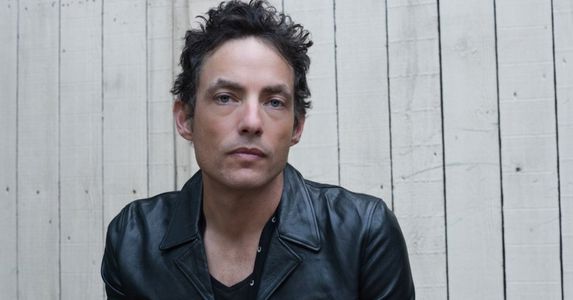
Rock ‘n’ roll is often hard to define, or even to find, in these fractured musical times. But to paraphrase an old saying, you know it when you hear it.   And you always hear it with the Wallflowers. For the past 30 years, the Jakob Dylan-led act has stood as one of rock’s most dynamic and purposeful bands – a unit dedicated to and continually honing a sound that meshes timeless songwriting and storytelling with a hard-hitting and decidedly modern musical attack. That signature style has been present through the decades, baked into the grooves of smash hits like 1996’s Bringing Down the Horse as well as more recent and exploratory fare like 2012’s Glad All Over.   Even so, in recent years, Dylan – the Wallflowers’ founding singer, songwriter and guitarist – has repeatedly stepped outside of his band, first with a pair of more acoustic and rootsy records, 2008’s Seeing Things and 2010’s Women + Country, and then with the 2018 film Echo in the Canyon and the accompanying soundtrack, which saw him collaborate with a host of artists classic and contemporary, from Neil Young and Eric Clapton to Beck and Fiona Apple.   But while it’s been nine long years since we’ve heard from the group with whom he first made his mark, the Wallflowers are silent no more. And Dylan always knew they’d return. “The Wallflowers is much of my life’s work,” he says simply.   Plus, he adds with a laugh, “It’s pretty hard to get a good band name, so if you have one, keep it.”   Good band name aside, that life’s work continues with Exit Wounds, the brand-new Wallflowers studio offering. The collection marks the first new Wallflowers material since Glad All Over. And while the wait has been long, the much-anticipated record finds the band’s signature sound – lean, potent and eminently entrancing – intact, even as Dylan surrounds himself with a fresh cast of musicians.   Which, the front man is quick to point out, is not all that unusual. “The Wallflowers has always been a vehicle for me to make great rock ‘n’ roll records,” he says. “And sometimes the lineup that makes the record transfers over into touring, and sometimes it doesn’t. But my intention is always to make the Wallflowers record I want to make, using the musicians I have beside me.”   Dylan’s vision has always been the core of the Wallflower’s music. How he chooses to express that vision, however, is what makes a song a Wallflowers song. “I usually just let the songs tell me what kind of arrangements they need,” he says. “And if they're asking for full-band electric arrangements, then that’s what the Wallflowers provide. And I knew I wanted to make a full-band electric record this time out.”   And made one he has, with one special guest on board – Shelby Lynne, who lends her voice to three of the album’s tracks. “I hadn’t met Shelby before, but like most people, I’ve been a fan of hers for quite some time,” Dylan says. “She has one of those voices that's very uncommon, very unique, very rare.”   But there was more to their duet than just a mutual appreciation. “You can have your favorite singer come in, but it doesn’t mean you’ll have any connection – there has to be more than that,” Dylan continues. “And as soon as I heard Shelby sing, I knew we had something.”   That “something” is present throughout Exit Wounds, which, true to its title, is an ode to people – individual and collective – that have, to put it mildly, been through some stuff.   “I think everybody – no matter what side of the aisle you’re on – wherever we’re going to next, we're all taking a lot of exit wounds with us,” Dylan says. “Nobody is the same as they were four years ago. That, to me, is what Exit Wounds signifies. And it's not meant to be negative at all. It just means that wherever you’re headed, even if it’s to a better place, you leave people and things behind, and you think about those people and those things and you carry them with you. Those are your exit wounds. And right now, we’re all swimming in them.”   To be sure, Exit Wounds is populated by scarred souls that “used to rumble, used to roar,” of “nobodies drinking flat beer,” and those who’ve been “abandoned and locked out and pressed to the fire.” Throughout, Dylan’s lyrics are specked with images of spears and swords and battle-worn flags being raised, of wayward buses and battered ships, riderless horses and lost planes.   Of course, ask Dylan what these songs are about, and, well, like most practiced songwriters, he’s not going to tell you. “I'm always a little cautious when people ask that,” he says. “Not because it demystifies the songs, but more because I think it's belittling to the listener to have to be ‘told.’ I usually find that if you have to do that for someone, you probably didn't hit your mark.”   That said, Dylan will at least acknowledge that the tracks on Exit Wounds reflect the tumultuous times in which they were written. “The climate affects how you feel, which affects how you're writing songs, even if you’re not writing specifically about current events.” He turns to the late John Prine to illustrate his point. “If we still had John Prine, I don't think he'd be writing songs specifically about current affairs, but he'd probably be writing songs about characters affected by current affairs. I think that's mostly what I do.”   As far as Exit Wounds, Dylan continues, “I’m the same writer I’ve always been – I was just also writing during a time when the world felt like it was falling apart. That changes the way you address even the simplest things, because you have panic in your mind all the time. You have anxiety. And you also have hope. And it’s all in there.”   When it came to realizing these new songs on record, Dylan assembled a backing band of musical associates – “people that I've wanted to play with or that I have played with through the years” – and headed into the studio under the watchful eye of producer Butch Walker.   As for what Butch brought to the sessions? Beyond his pedigree as an in-demand producer and first-rate singer-songwriter and musician, he’s also, Dylan says, “someone I’ve known a long time, and that was important to me. Because you go through a lot when you make records, to be honest. When you’re young, you're taught that if you don’t have conflict in the studio, then you're probably not doing anything good. But I don't believe that. And so it was more of a joyful experience making this record.”   That joyful experience extended to Dylan’s interplay with his fellow musicians. “This was not the type of thing where it’s a rotating cast and you call a different drummer for each song, or you pull out the Rolodex and ring the local sessions guys,” Dylan says. “The record was made as a band – the five Wallflowers.”   And to Dylan, a band, even one with a constantly shifting lineup, is a sacred thing. “I've always been a believer in collaboration,” he says, “and no matter who I'm playing with I've always tried to include them very heavily. Otherwise, why would they be around? Because I do think bands, whether it’s a long standing group or just five people who are working together for that one stretch of time, make better rock ‘n’ roll records than solo artists.”   He laughs. “I mean, it's not 100 percent true, but it's usually true.”   At the end of the day, Dylan continues, “It’s just exciting to have guys playing in a room together. That's how you get the one plus one equals three factor, you know? That’s the magic.”   For Dylan, Exit Wounds is the next chapter in a career devoted to chasing – and capturing – that magic. “I came up in an era of great rock ‘n’ roll bands making great music, and it’s the way I always imagined I would do it one day,” he says.   “So that’s always been my vision with the Wallflowers – to be a great rock ‘n’ roll band. And I've worked on it for 30 years now and I still have a lot to say. It’s something I started a long time ago, and it’s far from finished.”

May 2026
Card image
05/01/2026, 07:30 PM MDT
Tommy Emmanuel

Hailed as “one of the best acoustic guitarists in the world” by NPR’s World Cafe, Tommy Emmanuel got his start at the age of six, when he first began touring his native Australia with his family’s band. As a teenager, he earned a reputation as a highly sought after sideman and session player, and by his early twenties, Emmanuel was playing on chart-topping hits and performing with acts like Air Supply and Men at Work. Inspired in part by his hero, Chet Atkins (who would later become a friend, mentor, and collaborator), Emmanuel stepped out on his own as a solo artist in 1979, releasing the first in a string of acclaimed instrumental albums that would make him an unlikely celebrity in his home country and beyond. In the decades that followed, he would go on to headline everywhere from the Sydney Opera House to Carnegie Hall; tour with luminaries like Eric Clapton and John Denver; win a Grammy Award for Best Instrumental Arrangement; perform for a televised audience of more than two billion at the Sydney Olympics; and collaborate with a who’s who of fellow guitar greats, including Les Paul, Mark Knopfler, Joe Walsh, Richard Thompson, Jason Isbell, and Billy Strings. Recorded in just four days, Emmanuel’s latest album, Living In The Light, stands as the most daring—and most rewarding—collection in the globetrotting fingerpicker’s remarkable catalog, fusing his pop, jazz, classical, and roots influences into a virtuosic masterwork as exhilarating as it is intimate.

Contacts

423 Central Ave NW, Albuquerque, NM 87102, USA