profile avatar

Appell Center for the Performing Arts

Description

Historic facility housing 2 theaters presenting national touring acts and educational programs.

Events

January 2026
Card image
01/23/2026, 07:30 PM EST
Bacon Brothers

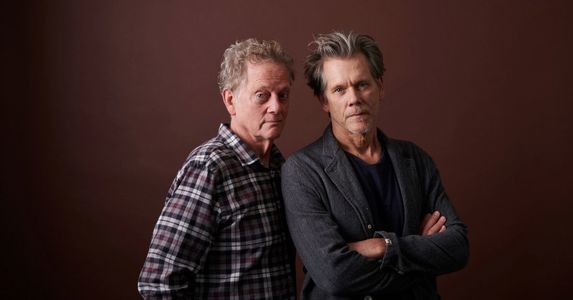
For the Bacon Brothers, featuring Michael, a Grammy-winning composer, and Kevin, an A-list Hollywood actor, music is all about exploration. They've spent the better part of three decades creating their unique blend of folk, rock, soul, and country music. They call that diverse sound "forosoco," and it's taken them around the world, from headlining gigs in Japan to American performances at iconic venues like Carnegie Hall, the Grand Ole Opry, and Gruene Hall. They've released twelve records to date, the most recent one being Ballad Of The Brothers. It's a record that highlights not only the similarities between Michael & Kevin but also the differences. The two siblings may be bound together by blood and a mutual love of American roots music, but they've grown into sharp songwriters and storytellers with their own distinct approaches. Ballad Of The Brothers makes room for both of those approaches, offering a mix of edgy alt-rock, Motown-inspired soul, fingerpicked folk, and everything in between. The album also marks the continuation of a musical partnership that began long ago in Philadelphia, where the Bacons were raised on a soundtrack of 1970s singer/songwriters, Philly Soul bands, and Classic Rock acts. Multiple decades and countless shows later, they're creating their soundtrack, saluting their old-school influences while making undeniably modern music. "We're still exploring the sound we began making all those years ago; we've just gotten a lot better at it," Michael says. "Music is a life's work. It's a universe of things yet to know. We're still making discoveries." 

February 2026
Card image
02/12/2026, 07:30 PM EST
Margo Price

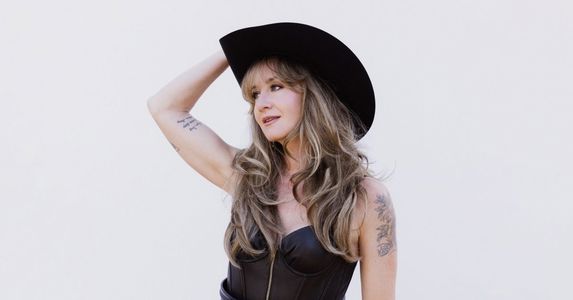
Nearly a decade ago, Margo Price turned Nashville on its head with her breakthrough, beloved debut solo album, Midwest Farmer’s Daughter. Released in the throes of bro-country and before pop stars were crossing over into the genre left and right, it showcased an artist completely unafraid to double down not only on herself, but what she’d always loved: classic country songs written from the intellect and the gut, hell-bent on truth-telling and both timeless and urgent all at once. Respected by her peers, praised by critics and beloved by her fans, Price created a lane where independent-minded, insurgent country music can exist and thrive alongside the mainstream, and became an ardent fighter for her beliefs in a genre where the norm is to shut up and sing. A trailblazer and a champion for the craft, Price redefined what it meant to be a modern country artist.             And now she’s back with an exquisite, truly timeless album that reconnects with her roots and pays tribute to the art of the country song, inspired in part by the legends whom she now calls colleagues and friends. Hard Headed Woman is both a look forward and a look back: a way to march forward while staying true to yourself when the path of less resistance is right there in front of us, and short cuts are around every corner. And a way to look back when we need to trim what is no longer working, and to stay connected with where we’re from. It is a promise and a manifesto, a love song to both a city and a genre, and a defiant cry for individuality. In creating Hard Headed Woman, Price brought all of her power as one of  our most beloved and respected songwriters to craft a deep exploration of love and America in a time of unprecedented uncertainty. Featuring appearances from Tyler Childers, co-writes with Rodney Crowell and a Waylon Jennings song that his widow, Jessi Colter, urged her to sing, it is country music as only Price can make it: free of rules, cherishing tradition, hard headed to the core but with a delicate, beating heart. Since releasing Midwest Farmer’s Daughter, Price has barely slowed down. She’s made four records, played Saturday Night Live, been nominated for a Grammy, toured the world alongside artists like Chris Stapleton and Willie Nelson, released a lauded memoir (Maybe We’ll Make It, due on paperback September 2nd), became an in-demand producer and was appointed as the first female board member of Nelson’s Farm Aid. And she’s been fearless when it came to genre, venturing into psychedelic rock on her most recent, Jonathan Wilson-produced record, Strays. It would have been easiest to just stay that course, and keep running. But Price doesn’t follow success or comfort. She follows the art.             It took a whole lot of hard work and honesty with herself and others to get there, but that’s never stopped Price before.  “I made the decision that I had to rebuild everything from the ground up,” Price says. “There’s all this pressure to be pumping out content, and I felt the opposite in the way I wanted to approach this record and my life in general.”             Price had also established herself as one of the most passionate, vocal artists in country music and beyond when it came to standing up for political and personal causes, from the presidential election, to abortion to gun control: happily hard headed when it came to the fight for equality and justice, especially for the working class and underserved in our society. Price has always brilliantly woven her activism into her songs, but her role as a spokesperson had started to overtake, on occasion, her role as a songwriter. She wanted to focus on using her written word to deliver the most potent punch of all.             “I always hope to do like Johnny Cash did,” Price says, “which is speak up for the common man and woman. But there have been so many threats and anger and vitriol over the years, when I am only coming from a place of love.” Price realized she just needed a break from everything outside of the bubble of family life and her art. She started spending more time at home, writing songs alone and with her husband, Jeremey Ivey. She started popping up in the dive bars and tiny venues around Nashville where she got her start, sometimes just to play a country cover or two or dance with the crowd. She refused guidance to write for pop stars or compromise her values for a quick buck. Most of all, she turned the emphasis in her music back to songwriting, exactly where she began.         “So much of Strays was leaning into this psychedelic, textural territory,” says Price. The music lent itself to vibrant, heavy stage jams, with Price often hopping behind the drumkit and bruising her thigh from a tambourine beat. She found herself longing for the days when it was just her and her guitar, playing at an East Nashville dive bar. “I always knew,” she adds, “I would come back to this more rooted sound.”             Hard Headed Woman is rooted to its core. Rooted in Price’s history and struggle to make it as a musician for so many years in a town that prizes uniformity and the bottom line, rooted in the country and folk sounds that have become her signature, rooted in the simplicity of a few key collaborators instead of songs-by-committee. At the heart of Price’s work is her creative partnership with Ivey, with whom she describes as having a “soul connection.” “I'm a songwriter,” Price says. “I'm not somebody who goes out and needs five people to craft a song, and then tack my name on it. That’s never been my style. I have something to say.” Something to say, nothing to prove. The first song they wrote for the album that would become Hard Headed Woman was “Close to You,” a simple, pining call for a lover that is infused with the sounds of the desert. It’s unfettered and truth-telling, accented by some flamenco guitar and Price’s gorgeous, urgent vocals. “We played the jukebox while democracy fell,” Price sings, never letting her songs fall out of the context in which they exist. It’s the kind of thing that only she could write, carrying both love and fear in one single line. As more songs started to form, an early boost of confidence came from her friends Rodney Crowell and Emmylou Harris, who heard some of the work at a political fundraiser and encouraged Price to keep going.  “I have both of them to thank for building me up and making me believe in the songs I am writing in this season of my life,” Price says. Crowell remained not only an inspiration and supporter of the album but a contributor: he co-wrote two songs with Price and Ivey.             The album that unfolded from there is drenched in Price’s unique story and unshakeable instincts: while Midwest Farmer’s Daughter was about her journey from childhood to Nashville, Hard Headed Woman is very much her battle since from dive bars to tour buses, through parenthood and marriage, through scrutiny and sacrifice all while fighting constantly for what she believes in, and the music she loves. It begins with a proclamation on the prelude, which serves as the album’s mission statement: or, Price puts it, “a disclaimer and reminder that I don't owe you fucking shit.”             Songs like the album’s lead single, “Don’t Let the Bastards Get you Down,” speak for the downtrodden and the forgotten, an “anthem for people who are being overlooked in society and need to be lifted up,” Price says, “because we are up against so much right now.” As so many of Price’s songs do, it speaks both for the personal and the political all at once. Price was inspired by the message Kris Kristofferson whispered to Sinead O’Connor when she was booed on stage at a Bob Dylan 30th Anniversary show, and even got Kristofferson’s widow’s blessing to include his name on the credits. “I always admired Kris for how he stood by her in that moment, instead of pulling her off the stage like they told him,” Price says. It serves as a reminder to anyone who encounters resistance in the face of fighting for justice to keep going, especially when it would be so much easier to capitulate and cower. “The song was originally written for a movie that never happened, but it feels so timely with everything that’s going on in the world,” Price explains. “The phrase, ‘Don’t Let The Bastards Get You Down’ originates from Margaret Atwood’s brilliant 1985 piece of literature, The Handmaid’s Tale. It’s referred to in Latin and used as a rallying cry for resistance against the oppressive regime that symbolizes resilience and hope in the face of adversity. Nolite te Bastardes Caborundorum.”             That spirit resonates all across the songs of Hard Headed Woman. The blistering “Don’t Wake Me Up” was based around some writings that Ivey stumbled upon in one of Price’s notebooks, inspired in part by her deep readings of Frank Stanford, one of her favorite poets due to his freewheeling work free of boundaries. They spun it all into song in minutes that chugs with the essence of Dylan’s “Subterranean Homesick Blues”: “The way this world is going, ain’t where I’m at,” Price howls in her powerful, unmistakable voice. “Nowhere is Where,” turns slow and contemplative, road-worn but never broken, the call of someone who has been to the mountain but never forgets the prairie below. And “Losing Streak” whirls in with an organ and out with a weary, world-worn defiance: our worst times don’t define us, but they’re always part of who we are. There are songs that go back to the beginning of Price’s early grind, like the western-tinged “Wild at Heart,” reflecting on how much her life and the city of Nashville has changed over the years – and how important it is to stay true to exactly who you are despite it all. Another, called “Red Eye Flight,” is about both leaving a lover and also leaving her longtime band the Pricetags. “I’ve been with those players for ten, thirteen years,” she says. “But I could feel that I needed to make a change, and to change texturally what’s going on with the band. But it’s a familial bond, different than a friendship.” There are a few choice covers and cuts, too: “Love Me Like You Used To Do” is by Price’s friend Steven Knudson, an unsung Nashville writer on whom she hopes to shine a spotlight (helping to elevate the town’s incredibly talented but buried voices is one of Price’s favorite pastimes). Friend Tyler Childers joins Price on that waltzing country ballad, while “I Just Don’t Give a Damn” is Price’s “Jolene goes to Memphis” take on the Jimmy Peppers and George Jones classic. And showcasing how Price has been trusted by the greats to lead the next generation of country music renegades, “Kissin You Goodbye” was given to Price by Jessi Colter, Waylon Jennings’ widow, when Price was producing her record. They’re songs chosen to appreciate the past and the present as she sees it – not as Music Row or the algorithm might dictate – and place Price squarely amongst her heroes as a living and breathing part of the new country tradition.             When it came time to record Hard Headed Woman, it was important for Price to keep that ethos alive, decamping to Nashville’s RCA Studio A and reuniting with producer Matt Ross-Spang, with whom she made her first two solo albums. Though she has worked with everyone from Sturgill Simpson to Jonathan Wilson since, it was Spang’s vocal rebuke of easy studio shortcuts that made her eager to reunite again. “He’s so unpretentious,” Price says. “He fully believes in me, he fully believes in my songs. He got us back to feeling it in your gut and not needing everything to be so perfect.”             It felt truly significant for Price to make the album in Nashville, a city where she’s lived for over two decades and played a seminal role in its transformation, yet somehow never recorded an album in the place she’s called home. The historic RCA Studio A helped connect Price even closer to the legacy of songwriting she holds so dear, a place where everyone from Dolly Parton to John Prine to Loretta Lynn have made albums. “It felt like there were ghosts and spirits just hanging out,” Price says. In perfect kismet, she also launched her own signature Gibson J-45 guitar, inspired by her 1960’s Gibson she’s had by her side for years as her career took off. It’s all part of the continuity that she wishes to create with her art, not just with timeless songs but inspiring future generations of women, mothers and artists in general who don’t want to sacrifice their vision, moral compass or family life in favor of mainstream success. At its core, Hard Headed Woman is about that furious instinct to never waver, especially when ourselves, our values and our future is so clearly on the line. As she sings on the title track, “I ain’t ashamed, I just am what I am.”             “I hope this album inspires people to be fearless and take chances and just be unabashedly themselves,” Price says, “in a culture that tries as hard as it can to beat us into all being the same.”  

Card image
02/14/2026, 07:30 PM EST
Marty Stuart

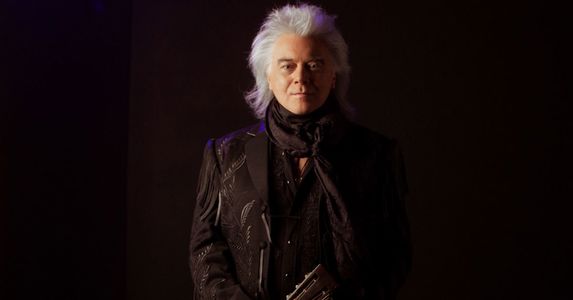
With legends like George Jones, Johnny Cash and Merle Haggard all passed on, country music purists often echo the question Jones himself asked: “Who’s going to fill their shoes?” The answer, in part, is Marty Stuart. While he’s too gracious to admit it himself, the Grammy-winning singer, songwriter and musician is living, breathing country-music history. He’s played alongside the masters, from Cash to Lester Flatt, who discovered him; been a worldwide ambassador for Nashville, Bakersfield and points in between; and safeguarded country’s most valuable traditions and physical artifacts. Including its literal shoes: Stuart counts the brogan of Carter Family patriarch A.P. Carter and an assortment of Cash’s black boots among his vast collection of memorabilia. But most importantly, Stuart continues to record and release keenly relevant music, records that honor country’s rich legacy while advancing it into the future. Way Out West, his 18th studio album, hits both of those marks. Produced by Mike Campbell (of Tom Petty and the Heartbreakers), the album is a cinematic tour-de-force, an exhilarating musical journey through the California desert that solidifies Stuart as a truly visionary artist. Opening with a Native American prayer, a nod to Stuart’s affinity for the indigenous people, particularly the Lakota, Way Out West transports the listener to the lonely but magical American West. It is, in its own way, musical peyote.  “If you go and sit by yourself in the middle of the Mojave Desert at sundown and you’re still the same person the next morning when the sun comes up, I’d be greatly surprised,” says Stuart. “It is that spirit world of the West that enchants me.”  Specifically the promised land of California. Growing up in Philadelphia, Mississippi, Stuart was taken by the mystique of the Golden State: the culture, the movies and especially the music. “Everything that came out of California captivated my kid mind in Mississippi,” he says. “It seemed like a fantasy land. Way Out West is a love letter to that.” As such, the album could only be recorded there, and Stuart, with his longtime backing band the Fabulous Superlatives, decamped for California. They recorded half of the album at Capitol Records and the rest at Campbell’s M.C. Studio, a gritty space with a vibe all its own. Much of the early Heartbreakers music was recorded at Campbell’s and that primal rock & roll energy is palpable throughout Way Out West, reinforced by Capitol’s own rock history: the Hollywood studio birthed iconic records like the Beach Boys’ Pet Sounds and the country-rock of Glen Campbell’s Wichita Lineman. Way Out West, with its atmospheric production, evokes those classics, as well as cowboy records like Marty Robbins’ Gunfighter Ballads and Trail Songs and Cash’s The Fabulous Johnny Cash, one of the first albums Stuart ever owned. “This is a California record, and I knew that when I emerged from the studio at night, I wanted to see palm trees and breathe that desert air,” says Stuart. Listeners too can feel the warmth of those Santa Ana winds over the album’s 15 tracks, a collection of newly written originals, instrumentals and rare covers like the Benny Goodman-penned “Air Mail Special,” and “Lost on the Desert,” once recorded by Johnny Cash. “I asked Johnny about that song when I was in his band, and he said the only thing he remembered about it was changing some words,” laughs Stuart. “But Way Out West just as easily could have been titled Lost on the Desert.” The idea of losing oneself runs through Way Out West, with the title track both a spiritual adventure and a cautionary tale – Stuart wraps up the travel ballad with a spoken aside about his own bad trips with pills. “I researched that for 30 years,” he jokes, self-deprecatingly. “There’s a lot of truth in that song.” The rollicking standout “Time Don’t Wait” also offers a warning: to not let life race by. “As the dirt fell through my fingers / the wind it seemed to say / don’t put off until tomorrow, what you can today,” sings Stuart. “That’s just country wisdom. I can’t claim that. But I like when you can talk about the simple things that are around us. That makes country music come to life for me,” he says. When it comes to transforming country songs into tangible experience, Stuart has a secret weapon: the Fabulous Superlatives. Made up of guitarist Kenny Vaughan, drummer Harry Stinson and new member, bassist Chris Scruggs, the Superlatives are an extension of Stuart himself. “The Superlatives are missionaries, they’re fighting partners. They’re my Buckaroos, my Tennessee Three, my Strangers. They’re my legacy band and have been since Day One,” says Stuart. Along with the playing of Mike Campbell, who contributed guitar, B-3 organ and piano, the Fabulous Superlatives are all over Way Out West and ensure that the mystical detours Stuart explores always remain of the moment. As Stuart himself will tell you, he often ventures off the reservation  – in a way, his entire career has been “way out west.” While other artists chased popular trends in the name of radio play, he formed complete bodies of work, not unlike the greats he idolized. Way Out West is just the latest embodiment of that creative mission. “I would play this record for Hank Williams, Merle Haggard or Ernest Hemingway and never bat an eye,” says Stuart. “There’s something in there that would entertain each of them.” But Stuart also made Way Out West for those who come after. As he sees it, there is no greater responsibility in music than to share what you’ve learned. “Lester Flatt saw something in me and gave me his wisdom, wit and music. Johnny Cash was my best friend. But all of that doesn’t come for free. The job is to pass it along,” says Stuart, stretching out his arms. “That’s the way it’s supposed to be in country music.” With Way Out West, Stuart holds up his end of the deal.

Card image
02/26/2026, 07:30 PM EST
An Intimate Evening with JJ Grey & Mofro

JJ Grey & Mofro – Olustee Bio written by Marc Lipkin   “Impassioned singing, riff-based Southern rock, cold blooded swamp funk and sly Memphis soul…Rich, funky blues celebrate life’s most fundamental joys. Grey is a singer-songwriter with unforced talent and deep feeling.” –The New York Times “A deeply-rooted blend of southern-fried rock and swamp funk…richly evocative lyrics...plainspoken, blue-collar American music.” –NPR “The swami of swamp rock...JJ Grey is a North Florida sage and purveyor of the funkiest swamp rock the world has ever heard…chicken-scratch guitar and bone-deep songs.” –Oxford American According to musician, singer and artist JJ Grey, “The best songs I’ve ever written, I never wrote. They wrote themselves. The best show I ever played, played itself and had little to do with me or talent. To me, those things come from the power of an honest moment, and I guess I’m trying to live in that power and not force life to cough up what I want.” Since his first album, Blackwater, back in 2001, Grey has been releasing deeply moving, masterfully written, funkified rock and front porch Southern soul music. Now, with his new album, Olustee—his tenth and first in nine years, and the first he has self-produced—Grey is back, singing his personal stories with universal themes of redemption, rebirth, hard luck, and inner peace. With his music, Grey also celebrates good times with lifelong friends, oftentimes mixing the carnal with the cerebral in the very same song. Fueled by his vividly detailed, timeless originals spun from his own life and experiences in the Northern Florida swampland, Grey’s gritty baritone drips with honest passion and testifies with a preacher’s foot-pounding fervor. With Olustee, JJ Grey has once again pushed the boundaries of his own creative musical, lyrical and vocal talents, delivering an album that is destined to become a stone-cold classic. Many of the songs are steeped in the mythical Southern stories of his ancestral Florida home and filled with people from JJ’s life. The songs overflow with the sights and sounds of the region as told through the eyes of a poet and sung with pure, unvarnished soul. The album’s eleven songs range from the introspective opener The Sea to the raucous, celebratory first radio single, Wonderland, to an escape from an out-of-control wildfire in the title track, to the inward-looking closer, Deeper Than Belief. Singing of his own personal triumphs and struggles, his hopes and desires, his friends and family, Grey’s message is simple and strong: respect the natural world and always try to live in the moment. And never forget the importance of having a good time. Grey made his recording debut in 2001 with Blackwater, following up in 2004 with Lochloosa. Both albums were released on the Fog City label under the name Mofro, a moniker the young Grey chose to describe his music and sound while still working his day job at a lumberyard. He has since used the word to name his band of world-class players. In 2007, Grey signed with Alligator Records and released a string of five popular and successful albums: 2007’s Country Ghetto, 2008’s Orange Blossoms, 2010’s Georgia Warhorse, 2011’s live CD/DVD Brighter Days and 2013’s This River. Ol’ Glory was released on the Provogue label in 2015. Throughout this amazing run of releases, press, radio and years of touring helped catapult JJ Grey & Mofro further into the mainstream. JJ Grey & Mofro have played countless festivals, including Lollapalooza, Bonnaroo, Wakarusa, Austin City Limits Festival, Byron Bay Blues Festival (Australia), Montreal Jazz Festival and Fuji Rock (Japan). Over the course of his career, Grey has shared stages with the likes of Lenny Kravitz, B.B. King, The Allman Brothers Band, The Black Crowes, Los Lobos, Jeff Beck, Ben Harper, Booker T. Jones, Mavis Staples, and many others. Grey and his band continue to play over 75 shows a year across the U.S. and around the world. JJ’s songs have appeared in films and on television, including on House Of Cards, Criminal Minds, Bones, House, Flashpoint, Crash, Friday Night Lights, The Glades, The Deadliest Catch and in films including The Hoot and The Gray Man. In November 2009, JJ wrote his first film score for the critically-acclaimed, Emmy Award-winning documentary The Good Soldier, which appeared in theatres and on Bill Moyers Journal on PBS. Grey, an avid outdoorsman, is a dedicated fisherman, a skilled visual artist (he has designed and drawn the cover art on all of his albums), an expert surfer and he holds an honorary position on the board of the Angler Action Foundation, dedicated to the protection of coastal fish and fish habitat. He has written passionately and articulately about his love for the untrammeled environment of his North Florida home and continues to advocate for its preservation. From his early days playing cover music behind chicken wire at a west side Jacksonville juke joint, to playing sold-out shows at some of the largest venues and music festivals in the world, JJ Grey has always delivered his soul-honest truths. Now, with Olustee, JJ Grey & Mofro will bring their music directly to fans as they hit the road for a massive months-long tour across the country and throughout the world. AllMusic says JJ Grey’s music is “as authentic as the ground under your feet because that’s where it comes from—just before it moves, simply and directly, through the body of the listener, into the human heart.” DISCOGRAPHY: 2024 Olustee (Alligator) 2015 Ol’ Glory (Provogue) 2013 This River (Alligator) 2011 Brighter Days (Alligator) 2010 Georgia Warhorse (Alligator) 2009 The Choice Cuts (Alligator, vinyl-only “Best Of”) 2008 Orange Blossoms (Alligator) 2007 Country Ghetto (Alligator) 2004 Lochloosa (Fog City) 2001 Blackwater (Fog City)   Alligator Records, LLC P.O. Box 60234, Chicago, IL 60660 www.alligator.com • publicity@allig.com (773) 973-7736

Card image
02/28/2026, 07:30 PM EST
Jake Owen

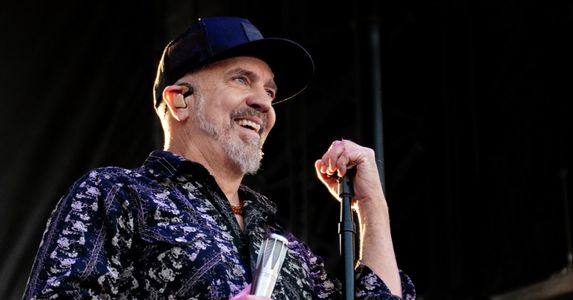
The much-anticipated new album American Love represents the best of Jake Owen both musically and personally, and that’s because the project is the result of a soul-searching journey that led him to explore the meaning of life and music. While recording the album, he ventured down some enticing new musical paths, but eventually decided to return home to his Florida-inspired roots, embracing the unique sound for which he is popular. Personally, he worked through the pain and healing of a divorce and renewed his commitment to what really matters in life--hope, optimism and the power of love.   American Love is a new beginning for Owen, who has become a beacon of positive vibes through his uplifting lyrics and melodies, optimism, love of the beach and his youthful spontaneity. This begins the exciting new chapter in his award-winning career that has earned five number one hits-- “Barefoot Blue Jean Night,” “Beachin,” “The One That Got Away,” “Alone with You” and “Anywhere with You.”   This year marks Owen’s tenth anniversary, a track record that is increasingly becoming a rarity in today’s popular music landscape. Since releasing his debut album on RCA Records in 2006, Startin’ with Me, he has become one of today’s most popular male country singers for his irresistible melodies, smooth vocals and laid-back attitude.   His second album, 2009’s Easy Does It, contained the singles “Don’t Think I Can’t Love You” and “Eight Second Ride” and led to him receiving the Academy of Country Music’s Top New Male Vocalist Award. He landed his first No. 1 hit (and double platinum-selling single) with the title track of his third studio album, Barefoot Blue Jean Night, in 2011. That album also produced three more No. 1s—the platinum-selling “Alone with You,” the gold-selling “The One That Got Away,” and “Anywhere with You.” With the success of that album, he won Breakthrough Artist of the Year at the 2012 American Country Awards.   His fourth studio album, Days of Gold, was released in 2014 and contained the No. 1 hit “Beachin.” Along the way, he toured with artists including Kenny Chesney, Keith Urban, Jason Aldean, Brad Paisley, Little Big Town and Sugarland.   When he began working on his fifth album, he initially felt compelled to attempt to make what he thought would be a cooler, hipper sound, as evidenced by the song “Real Life,” which was released to radio. However, he soon discovered that cool and trendy aren’t what matters; authenticity and truth are. That’s why he has been truthful about the fact that the last few years haven’t always been easy for the good-time guru.   He launched his first headlining tour and reach new career heights, got married and had a daughter, Pearl. But then, his father received a cancer diagnosis, he went through a divorce and the head of his record label was fired. During some of his dark times, he was inspired by a quote that said, “Be kind and gentle and loving to everyone because everyone is fighting their own kind of battle.” 

Contacts

50 N George St, York, PA 17401, USA